Unternehmen müssen heute mehr denn je schnell, günstig und zuverlässig immer wieder aufs Neue gute Dinge liefern. Wie geht das? Indem sie Weiterentwicklung als permanente Aufgabe begreifen, die es zu organisieren gilt.
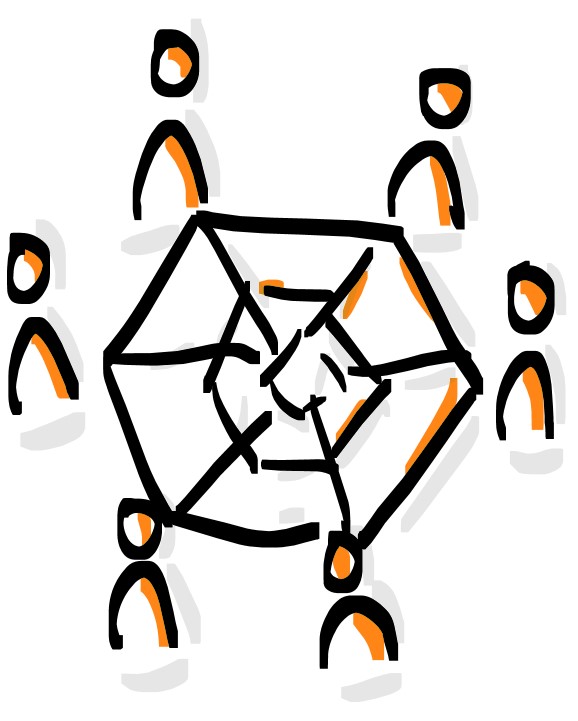
Auch wenn manchmal ein anderer Eindruck entsteht
so arbeiten wir in aller Regel doch halbwegs gut und auch erfolgreich. Und zwar indem wir unsere Abläufe so reibungslos wie möglich gestalten. Tauchen Probleme auf, so lösen wir sie meist, indem wir den Sand aus der gut geölten Maschine blasen:
Prozesse werden automatisiert, mindestens aber überarbeitet und, ja, oft wird auch Personal ausgetauscht oder entlassen. Gleichzeitig wird die Arbeit neu auf KollegInnen verteilt, die wiederum geschult werden, damit sie die Jobs wieder gut und am besten noch besser abarbeiten.
So hat das in der Vergangenheit funktioniert. Und zwar exzellent.
Doch schon seit einiger Zeit ist allerorten zu bemerken, dass die Dinge nicht mehr ganz so rund laufen.
Werden uns diese bewährten Erfolgsmittel also auch jetzt weiterhelfen?
Zweifel sind erlaubt
Zumindest, wenn wir es bei diesen Maßnahmen alleine belassen. Denn so berücksichtigen wir eben nur einen, wenngleich auch wichtigen Aspekt guter Unternehmensführung: Dass wir das laufende Geschäft möglichst gut und rentabel abzuwickeln haben.
Ein reibungsloses Tagesgeschäft ist aber eben nur die halbe Wahrheit, die uns auch nur halbwegs erfolgreich macht.
Mindestens ebenso wichtig ist
die Zukunft zu gestalten, also jederzeit (!) für neue Produkte, Produktverbesserungen, neue Routinen und angepasste, veränderte Strukturen zu sorgen.
er dies vergisst, ausblendet oder bewusst ignoriert, setzt den Erfolg, vielleicht sogar den Fortbestand der Unternehmung aufs Spiel.
Ohne Weiterentwicklung ist nicht nur möglich, sondern sogar wahrscheinlich, dass Kunden und Belegschaft (!) mit der Zeit unzufrieden werden, mittel- bis langfristig abwandern und erst einmal nicht wiederkommen.
Das galt natürlich immer schon.
Besonders aber gilt es in jenen dynamischen Märkten, die sich in den vergangenen digitalen Jahren rasant herausgebildet haben. Es lässt sich deshalb gar nicht deutlich genug hervorheben:
In so gut wie allen Branchen hat sich sehr vieles sehr radikal gewandelt. Und es ist anzunehmen, dass dies auch weiterhin geschieht.
Leider sind genau dafür unsere auf Stabilität und stabile, kontrollierbare Märkte konzentrierte Organisationen schlecht gewappnet.
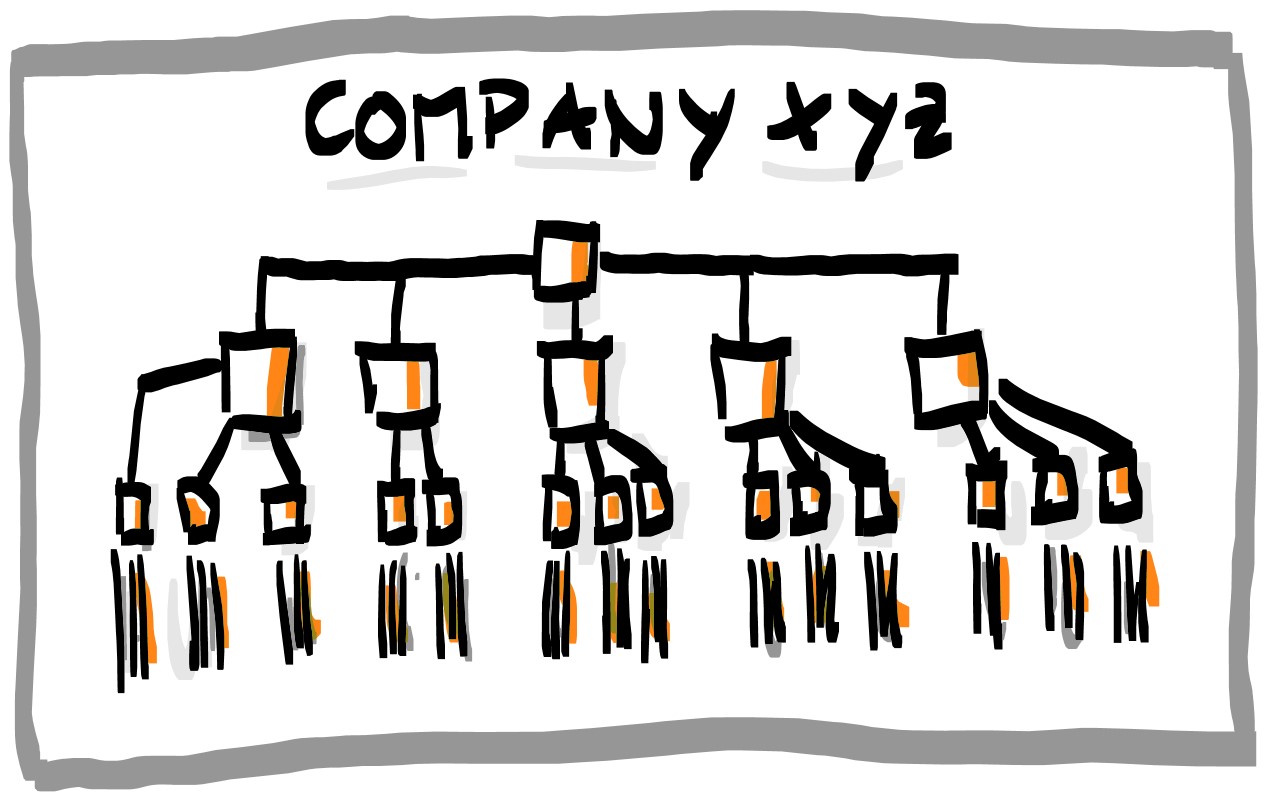
 Doch was genau hat sich eigentlich verändert?
 Doch was genau hat sich eigentlich verändert?
Zunächst, dass Kunden heute viel mehr Möglichkeiten haben, die sie auch nutzen. Es stehen Kunden heute viel mehr unterschiedliche Produkt- und Angebotsformen und Communities zur Verfügung als noch vor ein paar Jahren.
Dadurch kann sich heute jede/r selbst informieren und dadurch auch selbstbewusster entscheiden, was für sie oder ihn wann relevant, konsum- und erlebenswert ist. Und auch, was ihr oder ihm die Leistung wert ist oder wert sein sollte.
Kunden entscheiden dadurch heute viel souveräner und unabhängiger davon, was ihnen Produzenten und Handel als wichtig oder wertig kommunizieren oder auch suggerieren.
Es lässt sich auch so sagen: Unsere relativ überschaubaren Märkte für Massenwaren verabschieden sich (sofern sie überhaupt noch existieren).
An ihre Stelle tritt nun
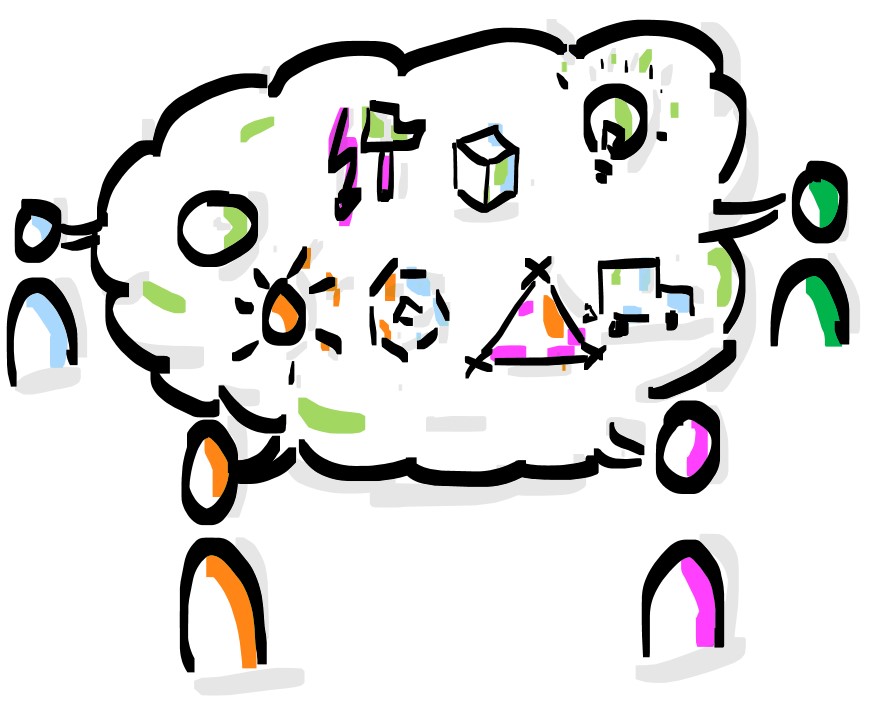
ein unübersichtliches Feld unterschiedlichster Angebote, Produkte und Dienstleistungen, auf dem sich sehr viele sehr unterschiedliche Spieler tummeln. Hier gelten andere, neue wertschöpfende Regeln.
Dies ist ein ziemlich anderes Geschäft als das, was wir bislang kannten, mit dem wir erfolgreich waren – und nach dem wir uns heute noch organisieren.
„Praktisch veranlagte Männer, die sich ziemlich frei wähnen von intellektuellen Einflüssen, sind überlicherwerise die Sklaven irgendeines verstorbenen Ökonomen.“ John Maynard Keynes
Wenn wir aber heute und in Zukunft erfolgreich sein wollen
gilt es, unsere bisherigen Vorstellungen von Organisation und wie man sie gestaltet zu überprüfen und wahrscheinlich auch teilweise über Bord zu werfen. Vor allem aber haben wir uns schleunigst anzupassen.
Jetzt heißt es lernen, das bestehende Geschäft so lange reibungslos, rentabel und effizient abzuwickeln, solange es uns noch trägt und gleichzeitig (!) unsere Produkte schneller und immer wieder marktnah zu verbessern bzw. völlig neue Lösungen zu (er-) finden, also: innovativ zu sein.
In der Vergangenheit, als Innovation eine vergleichsweise gemütliche Sache war ist uns das auch aufgrund unserer durchaus erfolgreichen hierarchischen Routinen aus dem Blick geraten.
Leider haben wir deshalb auch – aus organisatorischer Perspektive betrachtet – vergleichsweise wenig bis keine Übung darin, immer wieder größere und kleinere innovative Geschäftsideen zu erkennen und zügig marktnah umzusetzen.
„You may not want to upgrade, but you must because everyone else is. It’s an upgrade arms race.“
Kevin Kelly
Doch diesmal werden wir wegen der oben genannten Umstände
wohl nicht darum herumkommen, genau das zu lernen. Also: Unsere Unternehmen also wirklich in lernende, flexiblere, selbstorganisierte Organisationen zu verwandeln. Das stellt natürlich ganz andere Anforderungen an unsere Abläufe, die wir bislang bekanntlich sehr arbeitsteilig und sehr hierarchisch organisiert haben.
Mitarbeiterinnen und Mitarbeiter, Führungskräfte, Geschäftsführung und InhaberInnen werden in Zukunft anders, offener, selbstorganisierter, eigenmotivierter und auch selbstbewusster agieren, entscheiden und Verantwortung übernehmen als bisher.
Wer hofft oder darauf wartet, dass dies unkoordiniert, auf magische Art und Weise überhaupt und dann auch noch gut geschieht, dürfte eher enttäuscht werden. Ein solcher Wandel ist kein Selbstläufer. Sondern er ist als unternehmerische strategisch wichtige Aufgabe natürlich zu initiieren und zu organisieren.
Aus heutiger Sicht
 Aus heutiger Sicht
mag uns eine selbstorganisierte, lernende Organisation ungewohnt oder gar unmöglich erscheinen. Es spricht jedoch einiges dafür, dass es so kommen wird. Und zwar deshalb, weil unsere bisherigen Mittel eben nicht mehr auf die Situationen passen, die wir immer öfter antreffen werden.
Kurz: Wir haben schlicht keine andere Wahl, als uns in diese Richtung zu ändern.
Das Gute daran wird sein, dass wir so zügig das eine oder andere aktuelle dringende organisatorische und auch existentiell wirtschaftliche Problem lösen und gleichzeitig lernen können, unsere unternehmerische Zukunft immer wieder aufs Neue zu sichern.
Das ist doch schon mal was.
Weiterlesen?
- Camus, Albert: Der Mythos des Sisyphos.
- Kelly, Kevin: The Inevitable. Understanding the 12 Technological Forces That Will Shape Our Future.
- Kline, Peter: Ten steps to a learning Organization
- Kotter, John P.: Accelerate. Building Strategic Agility for a Faster-Moving World.
- Rother, Mike: Die Kata des Weltmarktführers. Toyotas Erfolgsmethoden.
- Pink, Daniel: Drive. Was Sie wirklich motiviert
- Senge, Peter M.: Die fünfte Disziplin. Kunst und Praxis der lernenden Organisation.
- Sutherland, Jeff: Die Scrum-Revolution. Management mit der bahnbrechenden Methode der erfolgreichsten Unternehmen.
- Schwartz, Barry: Warum wir arbeiten?
More than ever, companies are urged to deliver good things quickly, affordably, and reliably again and again. How to do that? By treating ongoing development as an important permanent task that needs to be organized.
Even if sometimes a different impression is given
we usually work reasonably well and also successfully. And we do this by making our processes as smooth as possible. If problems arise, we mostly solve them by simply removing the grit from the properly maintained machine:
Processes are automated, or at the very least, reengineered and, yes, often personnel are replaced or laid off. At the same time, the work is redistributed to colleagues, who in turn are trained to do the jobs well again, and preferably even better.
This is how it has worked in the past. And it worked excellently.
However, for some time now, it has been noticeable all around that things are no longer running quite so smoothly.
So will these proven means of success also help us now?
One might doubt it
At least if we leave it to those measures alone. For in this way, we just take into account only one, albeit important aspect of good corporate governance: that we have to handle the current business as well and as profitably as possible.
But a smooth day-to-day business is just half the truth that makes us even halfway successful.
To shape the future
at least as important is to provide new products, product improvements, new routines and adapted, changed structures at any time.
Forgetting, ignoring or deliberately ignoring this puts the success, perhaps even the continued existence of the company at risk.
Without further development, it is not only possible, but even most likely, that customers and staff (!) will become dissatisfied over time, will migrate from the medium to long term and will not return for a while.
This has always been true, of course.
But it is especially true in those dynamic markets that have rapidly emerged over the past digital years. It therefore cannot be overemphasized:
In just about all industries, a great deal has changed very radically. And it is likely that this will continue to happen.
Unfortunately, this is precisely what our organizations, focused on stability and stable, controllable markets, are ill-equipped to deal with.
But what exactly has a changed?
First of all, that customers today have many more options, which they also use. There are many more different product and offer forms and communities available to customers today than there were just a few years ago.
As a result, everyone can inform him/herself today and thus also decide more confidently what is relevant, worth consuming and experiencing for him/her and when. And also what the service is or should be worth to her/him.
As a result, customers today make decisions much more confidently and independently of what producers and retailers communicate or suggest to them as important or valuable.
It can also be said this way: Our relatively manageable markets for mass-produced goods are saying goodbye (if they still exist at all).
They are now being replaced by
a confusing field of the most diverse offers, products and services, in which a great many different players are active. Here, different, new value-creating rules apply.
This is a rather unfamiliar business than the one we have known up to now, with which we have been successful – and according to which we still organize ourselves today.
„Practically minded men who fancy themselves quite free from intellectual influences are more often than not the slaves of some late economist.“ John Maynard Keynes
But if we want to be successful today and in the future
it is necessary to review our previous ideas about organization and how to design it, and probably to throw some of them overboard. Above all, we have to adapt without delay.
Now it is necessary to learn to handle the existing business smoothly, profitably and efficiently as long as it still carries us and at the same time (!) to improve our products faster and always close to the market or to (find) completely new solutions, ie: to be innovative.
In the past, when innovation was a comparatively cozy thing, we also lost sight of this due to our quite successful hierarchical routines.
Unfortunately, from an organizational perspective, we therefore also have comparatively little to no practice in repeatedly recognizing larger and smaller innovative business ideas and swiftly implementing them close to the market.
„You may not want to upgrade, but you must because everyone else is. It’s an upgrade arms race.“
Kevin Kelly
Because of this circumstances
we very likely won’t be able to avoid learning just that: Turning our companies into learning, more flexible, self-organized organizations. This time for real. Of course, this puts completely different demands on our processes, which we have so far organized in a very hierarchical way based on the division of labor.
In the future, employees, executives, management and owners will act, make decisions and assume responsibility in a different, more open, more self-organized, more self-motivated and also more self-confident way than before.
Anyone hoping or waiting for this to happen in an uncoordinated, magical way at all, and then also in a good manner, is likely to be disappointed. Such a change is not a matter of course. Rather, it must be initiated and organized as a strategically important entrepreneurial task.
From today’s perspective
a self-organized, learning organization may seem unusual or even impossible. However, there is much to suggest that it will happen. And this is because our existing means are no longer suitable for the situations that we will encounter more and more often.
In short, we simply have no choice but to change in this direction
The good thing will be that we can thus swiftly solve one or the other current urgent organizational and also existential economic problem and at the same time learn to secure our entrepreneurial future again and again.
For me, that’s good for a start, isn’t it?
Further Reading
- Kelly, Kevin: The Inevitable. Understanding the 12 Technological Forces That Will Shape Our Future.
- Kline, Peter: Ten steps to a learning Organization
- Kotter, John P.: Accelerate. Building Strategic Agility for a Faster-Moving World.
- Rother, Mike: Toyota Kata: Managing People for Improvement, Adaptiveness and Superior Results


