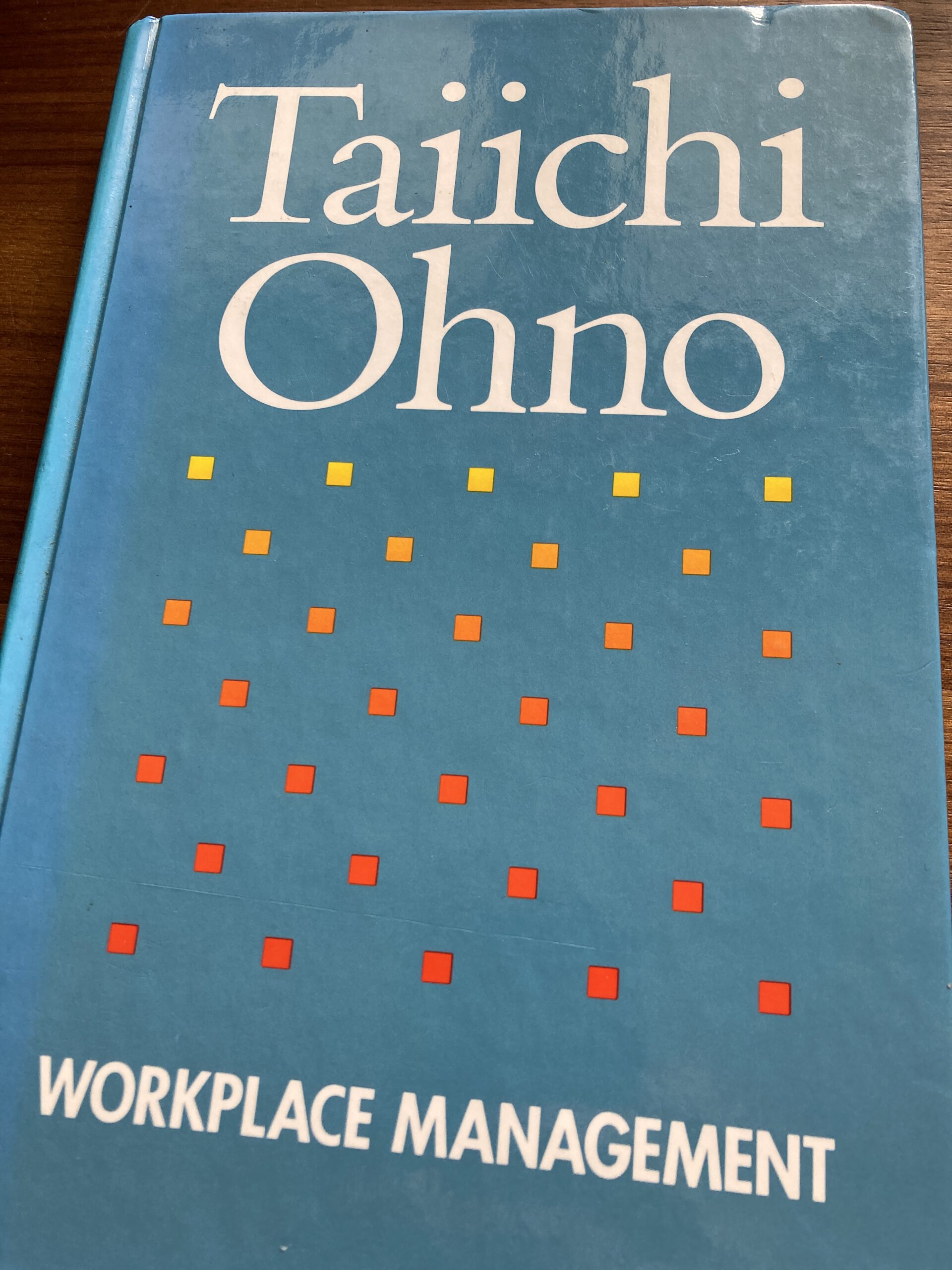
Gelegentlich werde ich nach Literaturhinweisen gefragt. Zum Beispiel zu Büchern, die für mich als Coach, Teamcoach und Berater wichtig waren oder sind. Hier der achte Teil der Reihe über einen wahren Klassiker: Workplace Management von Taiichi Ohno (Ōno)
Obwohl wir immer noch so tun
als kämen wir drum herum, werden wir eher früher als später schnell lernen müssen, überflüssige, teure, langsame status- und machtgeprägte Unternehmensstrukturen zu überwinden und abzulegen.
So zumindest meine Überzeugung.
Denn sonst läuft uns der Wettbewerb auf dem Absatz- UND dem Fachkräftemarkt spielend leicht den Rang ab.
Das gilt heute schon.
Und diese Situation wird sich zusehends und auch immer schneller verschärfen. Und zwar so, wie sie es die letzten Jahre schon getan hat.
- Was ergibt sich daraus grundsätzlich für die Betriebsführung?
- Was ist anders zu tun und wie?
- Mit welchem – anderen – Verständnis von Organisation, Unternehmensführung und Zusammenarbeit sind wir besser dran?
Für Antworten auf diese Fragen
ist für mich immer noch „Workplace Management“ von Taiichi Ohno DIE Bibel. Genau jener Taiichi Ohno, der als Urvater des Toyota Produktionssystems gilt und ohne Übertreibung als Erfinder des Lean-Managements gelten darf.
Rätselhafterweise wird sein Werk in Managementkreisen (und in der Managementausbildung sowieso) kaum beachtet.
 Und dennoch
 Und dennoch
Wer als ManagerIn, Führungskraft, BeraterIn, Coach etc. grundsätzlich wissen will, worauf es WIRKLICH ankommt, eine Firma wertschöpfend zu organisieren, der findet in diesem (les- und überschaubaren) Management-Klassiker viele gute Antworten.
PS: Ohno spricht übrigens meist über Produktion, also weniger über Service, vieles aber lässt sich natürlich mühelos adaptieren.
Occasionally I am asked for recommendations for reading. For example, books that were or are important for me as a coach, team coach and consultant. Here is the eighth part of the series on a true classic: Workplace Management by Taiichi Ohno (Ōno).
Although we still act
as if we could avoid doing so, sooner rather than later, we will have to overcome and get rid of unnecessary, expensive, and slow status– and power–driven corporate structures.
At least that is my conviction.
Otherwise, our competitors will easily outstrip us on the market for both sales and skilled workers.
This is already happening today.
And the situation will continue to become worse and worse, and even faster and faster. Just as it has done over the past few years.
- What does this mean for operations management in general?
- What should be done differently and how?
- What – different – understanding of organization, management and cooperation will make things easier for us?
Workplace Management„ by Taiichi Ohno is still THE bible for me
when it comes to finding answers to these questions. Exactly that Taiichi Ohno, who is considered the forefather of the Toyota Production System. Without exaggeration, he is regarded as the father of Lean Management.
Strangely though, his work is hardly noticed in management circles (not even in management education).
Nevertheless
If you are a manager, executive, consultant, coach, etc. and if you want to know what REALLY matters when it comes to organizing a company in a way that creates value, you will very much enjoy reading this (readable and manageable) management classic.
PS: By the way, Ohno talks mostly about production and not so much about service, but it can easily be adapted.