Ihr Chef hatte die glorreiche Idee, dass jetzt alle agil werden? Sie wollen vielleicht selbst damit herumprobieren? Jetzt haben Sie aber noch ein paar Fragen? Sie sind nicht allein. Ich bin zum Beispiel kürzlich gefragt worden:
Was ist das Grundprinzip der agilen Vorgehensweise?
Agilität wird häufig als reine Methode betrachtet, was nachvollziehbar ist. Sie ist aber mehr als ein spezifisches methodisches Vorgehen.
Sie ist vielmehr eine Haltung. Zumindest war sie es, bevor sie zum Produkt geworden ist.
Als Organisation, als Team, als Abteilung, als Spezialisten wollen wir dauerhaft von unserer Arbeit leben und uns damit auch verwirklichen. Das gelingt uns nur durch Produkte, Dienstleistungen und die Arbeit, die unsere Kundschaft auch längerfristig zufriedenstellt.
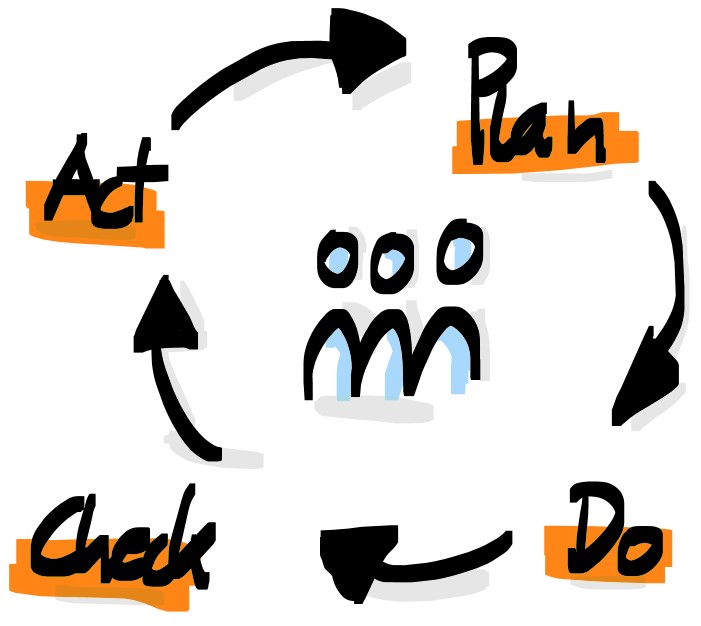
Eines der wichtigsten Elemente agiler Methoden ist deshalb
immer wieder sich selbst, seine Kunden und Geschäftspartner zu befragen, ob man noch auf dem richtigen Weg ist und was unter Umständen besser gemacht werden kann. So kann man sich weiterentwickeln, anpassen und verbessern.
Dies ist im Prinzip die Grundphilosophie agiler Zusammenarbeit.
Das mag sich im ersten Moment vielleicht platt und abgedroschen anhören. Wer aber agil arbeiten möchte, sollte wissen:
Hier sind dies keine Plattitüden.
Zumindest waren sie es nicht, bevor Agilität zum Beratungs-Produkt für Effizienzsteigerungen verkommen ist.
Eigentlich wird also im Gegenteil Haltung und Methodik ziemlich stringent umgesetzt und sehr konsequent gelebt. Agilität und ihre Methoden entfalten nur so ihre ganze Wirkung.
 Zwei Prinzipien sind besonders wichtig
 Zwei Prinzipien sind besonders wichtig
Produktorientierung und Qualitätsfokus.
Das Produkt muss einfach stimmen. Denn nur dafür zahlt der Kunde Geld. Agilisten konzentrieren sich deshalb bei allem, was sie tun, auf diese Aspekte und ordnen ihnen auch so ziemlich alles andere unter.
Permanentes Lernen durch Feedback sind zwei weitere wichtige Grundpfeiler der Agilität.
Kundenrückmeldungen zum Produkt und zur Zusammenarbeit sind dabei ein wesentlicher Aspekt.
Wirklich neuartig und entscheidend ist aber etwas anderes (ja, auch noch im „postagilen Hype“)
Nämlich, dass agile Teams in regelmäßigen und überschaubaren Rhythmen zusammenkommen, um sich offenes Feedback zu ihrer Arbeit zu geben. Unabhängig vom Produkt sprechen sie regelmäßig über die Art der Zusammenarbeit.
Denn die Qualität der Zusammenarbeit prägt die Produktqualität entscheidend mit, für die die Kunden schlussendlich bezahlen. Was also können oder müssen wir in den nächsten zwei bis vier Wochen verbessern?
Dies ist natürlich ein Vorgang, der alles andere als leicht oder konfliktfrei ist
und der sehr viel Offenheit erfordert. Schließlich muss man sich Fehler eingestehen, es werden Überzeugungen ausgetauscht und um den richtigen Weg gerungen.
All das ist aber wichtig, weil es dem Team hilft, seine Annahmen zu überprüfen, aus Fehlern zu lernen, einen gemeinsamen Weg zu finden, sich auf das Wesentliche zu fokussieren und Kompetenzen zu verbessern.
So wird das gesamte Team besser. Schritt für Schritt.
Um dies also tun zu können
 Um dies also tun zu können
brauchen die Teams und deren Mitglieder die Möglichkeit, im vorgegebenen Rahmen selbst entscheiden zu können, wie sie ihre Arbeit erledigen.
Selbstorganisation ist also das nächste wichtige Stichwort. Sie spart überflüssige „Genehmigungsverfahren“ ein und sorgt für Schnelligkeit und dafür, dass Menschen verbindlicher und zufriedener arbeiten.
Dadurch wird die Arbeit der Teams besser, schneller.
Und im Endeffekt auch nachhaltiger.
Your boss had the glorious idea that everyone is going agile now? You might want to try it out yourself? But now you have a few questions? You’re not alone. For example, I was recently asked:
What Is the Basic Principle of the Agile Approach?
Agile is often thought of as just a methodology, which is understandable. However, it is more than a specific methodological approach.
It is rather an attitude. At least it was before it became a product.
As an organization, as a team, as a department, as specialists, we want to live permanently from our work and thus also to express ourselves. We can only achieve this through products, services and the work that satisfies our clientele in the longer term.
One of the most important elements of agile methods is therefore
to repeatedly ask yourself, your customers and business partners whether you are still on the right track and what can be done better under certain circumstances. This is how you can evolve, adapt and improve.
In principle, this is the basic philosophy of Agile collaboration.
At first, this may sound trite and hackneyed. But anyone who wants to work agilely should know:
These are not platitudes here.
At least they weren’t before agile degenerated into a consulting product for efficiency enhancements.
So, on the contrary, attitude and methodology are implemented quite stringently and lived very consistently. Agility and its methods only unfold their full effect in this way.
Two principles are particularly important
Product orientation and quality focus
The product simply has to fit. After all, that’s the only thing the customer pays money for. Agilists therefore focus on aspects like these in everything they do, and subordinate pretty much everything else to them as well.
Permanent learning through feedback are two other important cornerstones of Agile.
Customer feedback on the product and collaboration is a key aspect of this.
But something else is truly novel and crucial (yes, even still in the „post-agile hype“ era).
Namely, agile teams meet in regular and manageable rhythms to give each other open feedback on their work. Regardless of the product, they regularly talk about how they are collaborating.
After all, the quality of that collaboration plays a key role in shaping the quality of the product that customers eventually pay for. So what can or must we improve in the next two to four weeks?
This is, of course, a process that is anything but easy or conflict-free
and which requires a great deal of openness. After all, mistakes have to be admitted, opinions are exchanged, and the right path is fought over.
But all of this is important because it helps the team examine its assumptions, learn from mistakes, find a common path, focus on what is important, and improve competencies.
This is how the whole team becomes better. Step by step.
So to be able to do this
the teams and their members need to be able to decide for themselves, within the given framework, how they do their work.
Self-organization therefore is the next important thing.It saves superfluous „approval procedures“ and ensures speed and that people work more committed and satisfied.
This makes the work of teams better, faster.
And, in the end, more sustainable.