Der agile Wandel sorgt für flexiblere, kundenzentriertere, vielleicht sogar werteorientiertere Unternehmen. Ach ja? Ein paar ungemütliche Gedanken zum ungeliebten Thema Macht.
Oft sind es beiläufige Begebenheiten, die eine große Wirkung auf uns haben. Erfahrungen, Begegnungen, Sätze, die uns im aktuellen Moment unerheblich erscheinen und dann doch nachhallen und langsam zu wirken beginnen. So erging es mir, als meine liebe Kollegin Carolin vor einiger Zeit in einem netten Gespräch über Gott und die Welt ganz nebenbei sagte: „Ach, ihr Agilisten blendet das Thema Macht doch völlig aus.“
Für einen kurzen Moment fühlte ich mich sportlich herausgefordert. Dann aber dachte ich mir, dass Carolin vermutlich zu wenig über Agilität weiß. Macht wird in agilen Arbeitsrahmen nämlich durchaus behandelt und der Umgang mit ihr sogar ziemlich eindeutig geklärt. So sah ich das damals. Und so sehe ich das auch heute. Richtig gemacht, sorgt Agilität schließlich dafür, dass Rollen entweder klar definiert werden (z.B. Scrum), oder zumindest möglichst offen diskutiert (z.B. Kanban): Wer entscheidet worüber? Wann? Für mich ist das einer der größten Vorteile, den agile Ansätze überhaupt haben. Denn so werden Statusrangeleien effektiv und pragmatisch ausgehebelt, die in hierarchischen Organisationen bekanntlich sehr verlässlich verhindern, dass schnell und fokussiert gut gehandelt wird. „Wir warten noch auf das OK vom Chef“ – in agilen Teams ist damit (weitgehend) Schluss. /1/2/
So oder so ähnlich rechtfertigte ich mir und selbstverständlich auch Carolin gegenüber dann auch, weshalb Macht eben kein blinder Fleck sei. Nicht für die Agilität allgemein. Nicht für überzeugte Agilisten. Und schon gar nicht für einen agilen Profi wie mich. Basta. Die Sache war damit erledigt. Und schon drehte sich das Gespräch um andere Dinge.
Auge(n) zu und durch?
- Was sagt denn nun Agilität und mit ihr die agile Szene zu Fragen der Macht in Organisationen, darüber, wie große Richtungsentscheidungen der Organisationen getroffen werden?
- Wie stehen Agilität und agile Profis dazu? Wie sehen ihre Antworten aus?
- Zum Beispiel auf die Frage, wie man seine Chefs denn nun dazu bekommt, selbst auch agiler heranzugehen, statt immer noch z.B. Ampelreports für die laufenden Projekte einzufordern oder ständig ad-hoc-Änderungen vorzunehmen?
- Wissen wir überhaupt allgemein genug über Macht, ihre Strukturen und ihre Dynamik?
- Inwiefern nutzen wir dieses Wissen?
- Wie gehen agile Berater, Coaches, Change Agents, Scrum Master, Product Owner grundsätzlich und konkret in Ihrer Arbeit mit Macht um?
Mein bisheriges Zwischenfazit, etwas ernüchtert: Gut möglich, dass wir uns bislang eher wenig bis oberflächlich um diese Fragen kümmern. Und wenn, dann eher einseitig. Eben in Hinblick darauf, dass gefälligst reibungslos, zielgerichtet und vor allem: schnell akzeptable Ergebnisse produziert werden. Das ist sicherlich nicht schlecht. Doch reicht das? Ist es das, was wir wollen? Sind das unsere (einzigen) Ansprüche?
Es muss sich etwas in unseren Organisationen ändern!
Die Zeiten werden immer unsicherer, wir treffen auf immer komplexere Herausforderungen, die wir immer weniger absehen können! Mit unseren bisherigen Mitteln stoßen wir an Grenzen! Unsere hierarchisch geführten Organisationen arbeiten zu langsam, zu schwerfällig, am Bedarf vorbei! Sie werden zur Gefahr! Also brauchen wir schnellere, transparentere, durchlässigere, flexiblere, eben: agilere Strukturen. Damit wir gemeinsam, immer wieder und schnell wichtige Entwicklungen erkennen und koordiniert (re) agieren können!
Leanansätze und Agilität mit ihren Prinzipien und ihrem gnadenlosen Fokus auf die Wertschöpfung sind die Rettung!
Das zumindest tragen wir gerne so oder so ähnlich mit großer Überzeugung vor.
Was hat ein Auge, zwei Daumen und ist einfach nur super?
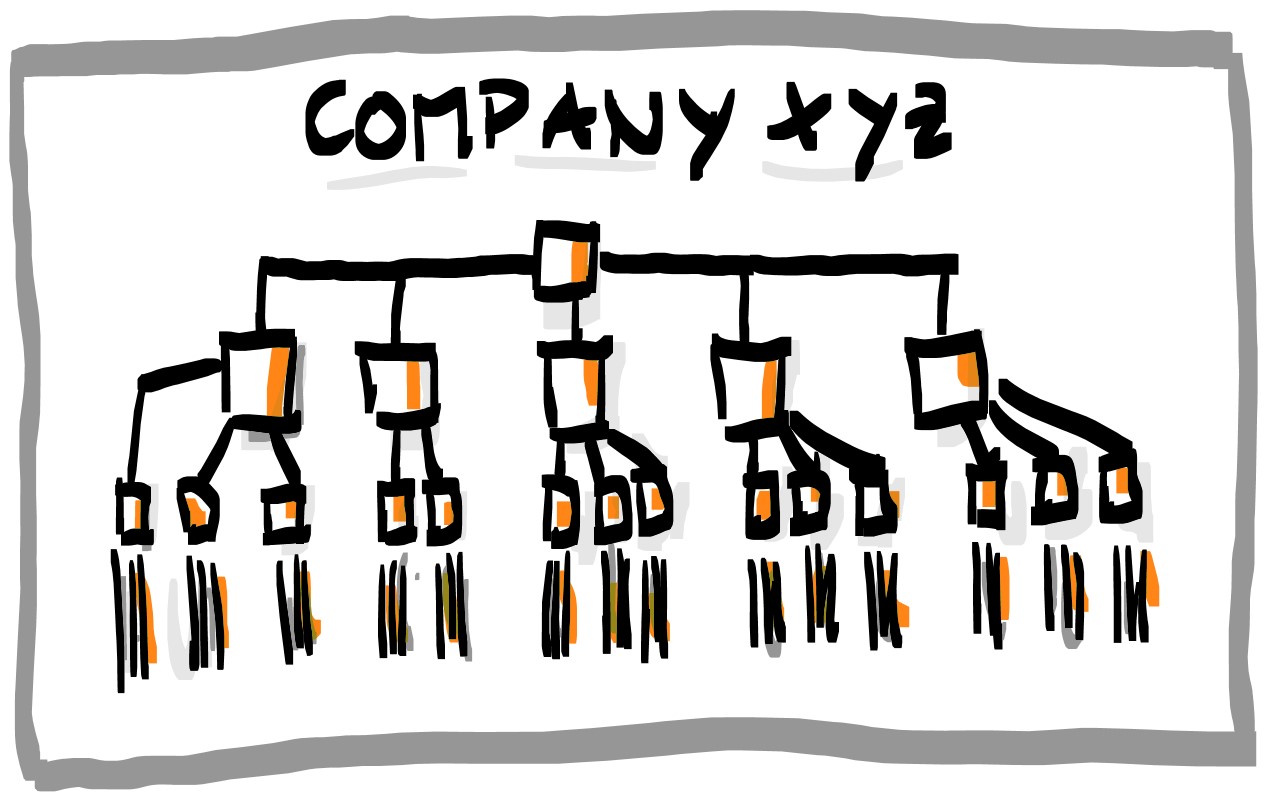
Doch etwas genauer betrachtet, kann da irgendetwas nicht ganz stimmen. Wenn unsere Diagnose zutreffend ist und wenn Agilität klassischen Organisationensformen wirklich überlegen ist: Wieso arbeiten nicht schon längst sehr viel mehr Unternehmen und sonstige Organisationen nach Lean-Maßstäben oder agil? Weshalb hat es – siebzig Jahre nach Lean und vierzig Jahre nach Scrum! – noch immer keinen organisatorischen Durchmarsch gegeben? /3/ Weshalb bleiben so viele hoffnungsvoll und mit Elan gestartete agile Veränderungsvorhaben und Lean-Initiativen auf halber Strecke liegen – obwohl wir doch als Experten oft selbst daran beteiligt sind?
Wäre es nicht unsere Aufgabe, uns als überzeugte und professionelle agile Organisations-Empiriker genau diese Fragen immer und immer wieder zu stellen: Haben wir eigentlich das erreicht, was zu erreichen war? Und wenn nein, warum nicht? Was ist anders zu tun? Was können/müssen wir verbessern? /4/
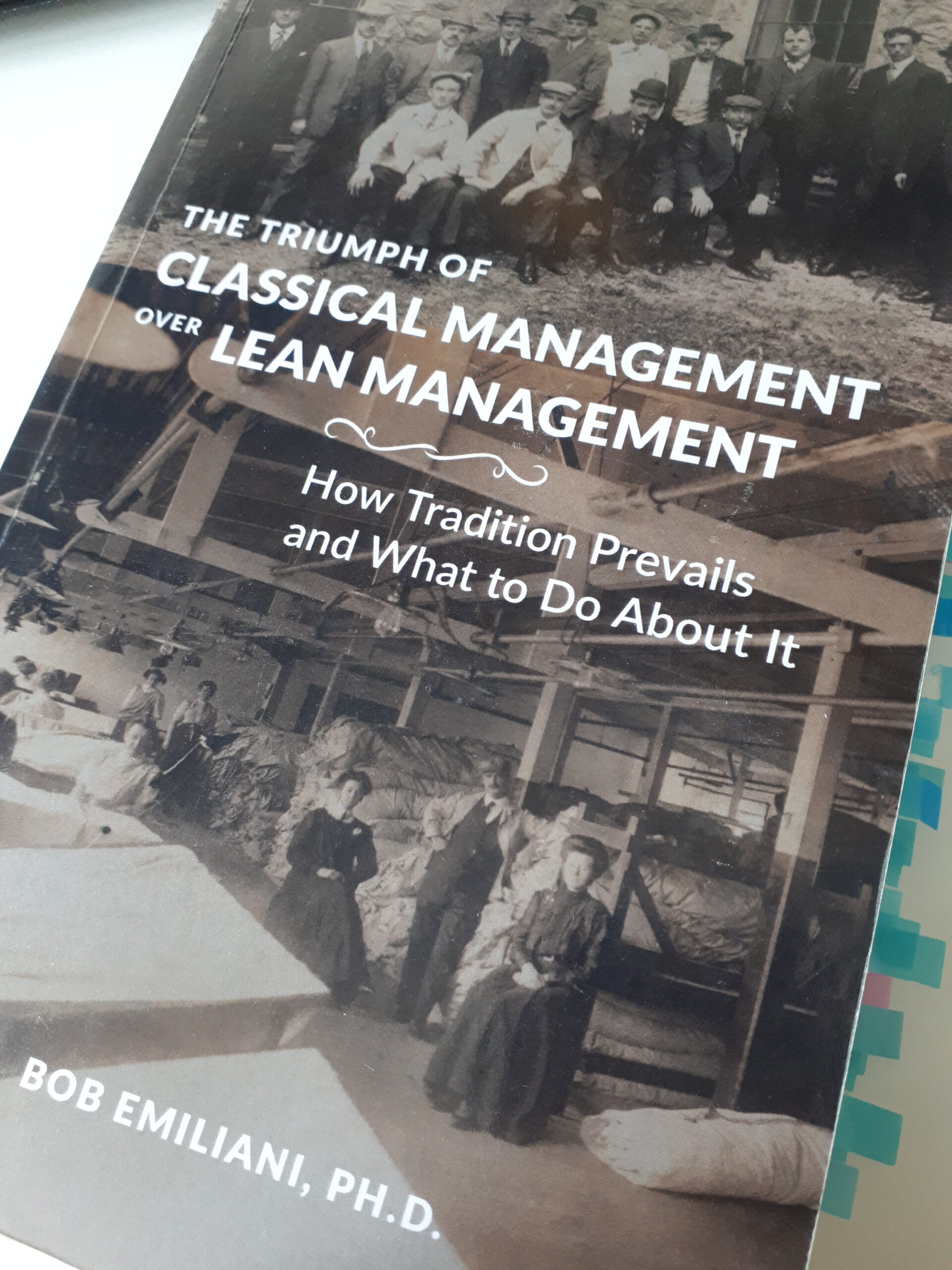
Solchen kritischen Fragen geht der Lean-Consultant Bob Emiliani schonungslos offen in seinem Buch „The Triumph of classical Management over Lean“ nach./5/

Die Fragen und Punkte, die er aufwirft, sind schmerzhaft unbequem. Sie gefährden das Erfolgs- und Überlegenheitsnarrativ und vielleicht auch das ein oder andere gefällige Selbstbild: Was sagt es über uns, unsere Expertise und die Qualität unserer Arbeit aus, wenn wir es bisher nicht geschafft haben, Lean und Agile breit zu promoten und zu etablieren?
Dabei geht es um alles andere als um Anklage oder Selbstanklage. Viel wichtiger ist es, die Gründe zu finden, damit wir unsere Arbeit besser machen können. Also: Bringt’s Lean und Agile vielleicht doch nicht so, wie wir glauben und behaupten (sicher nicht!)? Oder vermitteln wir es nur nicht gut genug (auf keinen Fall!)? Warum aber sind dann agile Initiativen so zäh?
Warum bleibt also der durchschlagende, breite Erfolg aus? Was übersehen wir?
Raus aus der Schonhaltung!
Vielleicht, dass wir – bewusst oder unbewusst – unangenehme Erkenntnisse vermeiden? Zum Beispiel, dass es für einen erfolgreichen agilen Wandel nicht allein reicht, agile Strukturen in den Umsetzungsteams zu etablieren, zu optimieren und gute Arbeitsergebnisse zu erzielen? Dass es notwendig ist, sich mit professionellem Sachverstand und Lust in die Niederungen der meist sehr geschichtsträchtigen konfliktreichen, statusverminten, angstbesetzten Beziehungsarbeit zu stürzen (und damit eben auch intensiv mit dem Management zu arbeiten)?
Dass dabei vor allem auch die sichtbare und unsichtbare Politik in Organisationen mitzubedenken und mitzubearbeiten ist? Anders gesagt: Dass neben dem ABC agiler Methodik eben auch das Regelwerk der Macht auswendig zu lernen und zu spielen ist (Igitt!)?/6/
Wenn wir jedoch die Augen davor verschließen, sollten wir es zumindest bewusst machen und uns die Konsequenzen klar machen: Wir haben zwar hocheffizienten Teams und Unternehmen geholfen, mit den Mitteln der Agilität noch effizienter Dinge zu erledigen („Doing twice the work in half the time.“).
Doch weil in der immer komplexeren Welt, in der wir uns wähnen (s.o.) Effizienz meist sogar sehr ungut wirkt, könnte dieser Schuss nach hinten losgehen. Denn Organisationen sind dadurch vielleicht noch mehr von der Frage abgelenkt, ob sie auch tatsächlich die richtigen Dinge tun./7/
„Ach, ihr Agilisten blendet das Thema Macht doch völlig aus.“
Ja, gut möglich, dass viele agile Enthusiasten und Praktiker Macht als Thema ausblenden oder unterschätzen und sich stattdessen lieber ausschließlich auf’s Tun stürzen, auf Strukturen, Tools, Methodisches./7/ Ich zumindest gestehe: Ich bin gefährdet.
Sicher ist jedenfalls, dass wir uns damit – wohlgemerkt in bester Absicht – selbst ein wirksames und vielleicht sogar entscheidendes Mittel für unsere Arbeit nehmen. Ebenso klar ist, dass wir damit unsere gewillten Klienten im Regen stehen lassen und den organisatorischen Status Quo eher noch zementieren. Obwohl wir ihn doch eigentlich zum Guten verändern sollen und wollen.
Die nächste Initiative, die ins Leere läuft. Ist das unser Anspruch?
Anmerkungen
- /1/ Die gute, alte Lean-Schule halt: Vermeiden von Waste (Überflüssigem). Siehe: Rother, Mike: Die Kata des Weltmarktführers. Toyotas Erfolgsmethoden. Frankfurt am Main, 2013. Oder: Senge, Peter M.: Die fünfte Disziplin. Kunst und Praxis der lernenden Organisation. Stuttgart, 2011.
- /2/ Und, ja, natürlich ist hier noch hinzuzufügen: Das alles geschieht, so gut es eben geht. Im so genannten agilen Change – und auch im sonstigen Geschäftsalltag – kommt es nämlich natürlicherweise und zwansläufig zu „hybriden“ Strukturen. Also dazu, dass hierarchische und agile Strukturen parallel existieren.
- /3/ Zumindest eine New-Work-Revolution könnte man doch erwarten.
- /4/ Gut möglich auch, dass wir an dieser Stelle hinter unsere eigenen professionellen Erwartungen zurückfallen. Seit nunmehr 14 Jahren können wir im jährlich erscheinenden „State of Agile-Report“ nachlesen, was keine große Überraschung sein dürfte, nämlich, dass „general organization resistance to change“ und die mangelnde Unterstützung des Managements und der Führungskräfte als größten Hindernisse für den agilen Change gesehen wird. Was brauchen wir noch, um zu erkennen, dass wir für eine höhere Erfolgsquote wohl besser genau in diesen Etagen ansetzen?
- /5/ Das kommt allerdings nicht überall in der Szene gut an – das Schicksal der Whistleblower. Ein für eine prinzipienverliebte Szene allerdings eher peinlicher Vorgang.
- /6/ Um in Bob Emilianis Worten zu sprechen: Wir haben das „Management Playbook“ zu kennen, zu erkennen und uns danach auszurichten. Mit anderen Worten: Wir haben bis zu einem gewissen Grad auch das politische Spiel zu spielen, um einem echten Wandel zumindest eine Change zu geben.
- /7/ Für nähere Hintergründe hierfür siehe vor allem Dave Snowdens Ausführungen in „The Cynefin-Framework.“ (Youtube-Video): www.youtube.com/watch?v=N7oz366X0. Wer gerne knöcheltief (oder noch tiefer) durch Themen watet, kann sich auch dieses Buch reinpfeifen: Taleb, Nassim Nicholas: Antifragilität. Anleitung für eine Welt, die wir nicht verstehen. München, 2013. Gut auch: Gigerenzer, Gerd: Risiko. Wie man die richtigen Entscheidungen trifft. München, 2013.
- /8/ Oder – das andere Extrem – abgehobenere, philosophischere oder spirituellere Themen.
Literatur, Links & Weiterführendes*
- Carolin Auner: www.carolin-auner.de
- Bob Emiliani: bobemiliani.com
- Scrum@Scale: www.scrumatscale.com
- 14th annual State of Agile Report. Hrg. von. Digital.ai Software, Inc. o.O., o.J.: https://explore.digital.ai/state-of-agile/14th-annual-state-of-agile-report
- Das Agile Manifest: agilemanifesto.org/
- ***Ameln, Falko von; Heintel, Peter: Macht in Organisationen. Denkwerkzeuge für Führung, Beratung und Change Management. Stuttgart, 2016.
- ***Emiliani, Bob: The Triumph of Classical Management Over Lean Management. How Tradition Prevails and what to Do about it. O.O, 2018.
- **Emiliani, Bob: Irrational Institutions: Business, Its Leaders, and The Lean Movement. South Kingstown, 2020
- Foucault, Michel: Überwachen und Strafen. Die Geburt des Gefängnisses. Frankfurt am Main, 1976.
- Foucault, Michel: Dispositive der Macht. Über Sexualität, Wissen und Wahrheit. Berlin, 1978.
- Gallup-Studie: State of Global Workplace: https://www.gallup.com/workplace/238079/state-global-workplace-2017.aspx
- Gigerenzer, Gerd: Risiko. Wie man die richtigen Entscheidungen trifft. München, 2013.
- Han, Byung-Chui: Was ist Macht? Stuttgart, 2005.
- Heffernan, Margaret: Uncharted. How to Map the Future. New York, 2020.
- **Heffernan, Margaret: Wilful Blindness. Why we ignore the obvious. London, 2011.
- Heiler, Stephan; Borck, Gebhard: Chef sein? Lieber was bewegen! Warum wir keine Führungskräfte mehr brauchen. O.O., 2018.
- Kotter, John P.: Accelerate. Building Strategic Agility for a Faster-Moving World. Boston, 2014.
- Laloux, Frederic: Reinventing Organizations. A Guide to Creating Organizations. Inspired by the Next Stage of Human Consciousness. Brussels, 2014.
- List, Stephan: Lebenszyklen in der Beratung. Zuerst veröffentlicht am 18.1.2006. Nochmals veröffentlicht im Blopost „Agilität un
Agile change makes for more flexible, customer-centric, perhaps even more value-driven companies. Really? Some uncomfortable thoughts on the unloved subject of power.
Often it’s casual incidents that have a big impact on us. Experiences, encounters, sentences that seem insignificant to us in the current moment and then reverberate and slowly begin to have an effect. That’s what happened to me when my dear colleague Carolin, in a nice conversation about God and his wife some time ago, said in passing: „Oh, you Agile people completely ignore the subject of power.“
For a brief moment, I felt challenged. But then I thought to myself that Carolin probably knows too little about Agile. Power is definitely dealt with in Agile frameworks, and how to handle questions of power is clarified without a doubt. That’s how I saw it back then. And that’s how I see it today, too.
If done correctly, Agile finally ensures that roles are either clearly defined (e.g. Scrum) or at least discussed as openly as possible (e.g. Kanban): Who decides what? When?
For me, this is one of the biggest advantages that Agile approaches have in general. It effectively and pragmatically eliminates status ranks, which in hierarchical organizations, this is well known, reliably prevent good action from being taken quickly and with focus. „We are still waiting for the boss to give the OK“ – In agile teams, we are (largely) done with this. /1/2/
In one way or another, I justified to myself and of course to Carolin why power is not a blind spot. Not for agility in general. Not for convinced Agile people. And certainly not for an Agile professional like me. And that’s that. That was the end of the matter. And the conversation turned to other things.
Close Your Eyes and Walkthrough?
But to my surprise, it didn’t end there. „You Agile people don’t talk about power at all.“ I couldn’t get my mind off that sentence. And again and again, I wondered if there wasn’t something to it. Am I missing something? Because apart from the roles, competencies, and processes in the Agile team, which regulate who decides what and when for the production of results:
- What does Agile and with it, the Agile scene say about questions of power in organizations, about how major directional decisions are made by organizations?
- What do Agile and Agile professionals think about this?
- What do their answers look like?
- What’s their advice i.e. to the question of how to get your bosses to act more agile themselves, instead of still demanding excessively detailed reporting for ongoing projects or constantly making ad-hoc changes?
- Do we even know enough about power and politics, its structures, and its dynamics?
- To what extent do we use this knowledge?
- How do Agile consultants, coaches, change agents, scrum masters, product owners deal with the matter in their work in a fundamental and concrete way?
My suspicion, somewhat sobering: It is quite possible that we have dealt with these questions in a rather superficial way so far. And if so, then it is rather one-sided, in order to produce acceptable results smoothly, purposefully, and – above all – quickly. That is not bad at all. But is it enough? Is that all we want?
Something must change in our organizations!
Times are getting more and more uncertain, we are facing more and more complex challenges that we can foresee less and less! With our present means, we are reaching our limits! Our hierarchically managed organizations work too slowly, too cumbersomely, and do not meet the needs anymore! They become a danger! So we need faster, more transparent, more permeable, more flexible, in other words: more Lean or Agile structures. So that we can recognize important developments together, again and again, and quickly, and act in a coordinated manner!
Lean approaches and Agility with their principles and merciless focus on value creation are the salvation!
At least that’s what we like to present with great conviction.
One Eye, Two Thumbs, and Just Superduper?
But if you take a closer look, something may not be quite right. If our diagnosis is correct and if Agile really is superior to classical forms of organization: Why haven’t many more companies and other organizations been working according to Lean standards or Agile for a long time now? Why is there – seventy years after Lean and forty years after Scrum! – still no organizational breakthrough?/3/ Why do so many Agile change projects and Lean initiatives remain halfway through? Even the ones that were started hopefully and with verve? Although we as experts are often involved in them?
Wouldn’t it be our task, as convinced and professional Agile organizational empiricists, to ask ourselves exactly these questions again and again: Did we actually achieve what we were supposed to achieve? And if not, why not? What is to be done differently? What can/must we improve? /4/
Lean consultant Bob Emiliani pursues such critical questions relentlessly and openly in his book „The Triumph of classical Management over Lean“./5/
The questions and points he raises are painfully uncomfortable. They jeopardize the success and superiority narrative and perhaps even the one or other pleasing self-image: What does it say about us, our expertise, and the quality of our work if we have not yet managed to promote and establish Lean and Agile on a broad scale?
This is anything but an accusation or self-accusation. It is much more important to find the reasons, why we have failed so far, in order to improve and do better. So: Is Lean and Agile not as good or as powerful as we believe and claim (certainly not!)? Or are we just not communicating it well enough (no way!)?
So why do Lean and Agile initiatives fail? Why is there no resounding, widespread success? What are we overlooking?
Get Out of Your Relieving Posture!
Perhaps we are overlooking that we – consciously or unconsciously – avoid unpleasant insights? For example, that for successful Agile changes it is not enough to establish and optimize Agile structures in the teams and achieve good work results? That it is very necessary to use our professional expertise and enthusiasm to plunge into the depths of the historical, conflict-ridden, status-mined, fear-filled relationship work.
Thus: We have also to work intensively with management? That above all the visible and invisible politics in organizations are to be considered and worked on? In other words: In addition to the ABC of Lean and Agile methodology, the rules of power are also to be learned and played by heart (Yuck!)?/6/
However, if we draw a blind eye to this, we should at least make ourselves aware of it and make the consequences clear: We have indeed helped highly efficient teams and companies to do things even more efficiently with the means of Lean and Agile („Doing twice the work in half the time.“)
But in the increasingly complex world in which we imagine ourselves to be (see above), efficiency is often a very bad thing, and this could backfire. Because organizations are perhaps even more distracted from the question of whether they are actually doing the right things./7/
„Oh, you Agile people completely ignore the subject of power.“
Yes, it’s quite possible that many Agile enthusiasts and practitioners fade out or underestimate power as a topic and instead prefer to focus exclusively on the product, the doing, on structures, tools, methodologies./7/ I confess: I am in danger to that.
What is certain, however, is that in doing so and (hopefully) with the best of intentions we are not using an effective and perhaps even decisive tool for our work. Also, it is clear that we are leaving our change-willing clients out in the rain, we are betraying them. And we are rather cementing the organizational status quo. Although we should and want to change it for the better.
The next initiative, which is going nowhere. Is that our claim?
Notes
- /1/ The good old lean school is: Avoiding waste (superfluous). See: Rother, Mike: The kata of the world leader. Toyota’s methods of success. Frankfurt am Main, 2013. or: Senge, Peter M.: The fifth discipline. Art and practice of the learning organization. Stuttgart, 2011.
- /2/ And, yes, of course, there is still to be added here: All this is happening as best it can. After all, in so-called agile change – and also in everyday business life – „hybrid“ structures occur naturally and inevitably. This means that hierarchical and agile structures exist in parallel.
- /3/ At least a New-Work-Revolution could be expected.
- /4/ It is also quite possible that we will fall behind our own professional expectations at this point. Since now 14
- /5/ However, this does not go down well everywhere in the scene – the fate of whistleblowers. A rather embarrassing process for a principled scene, though.
- /6/ To use Bob Emiliani’s words: We have to know, recognize and align ourselves with the „Management Playbook“. In other words: To a certain extent we also have to play the political game in order to at least give change a real chance.
- /7/ For more detailed background on this, see especially Dave Snowden’s remarks in „The Cynefin Framework. (YouTube video): www.youtube.com/watch?v=N7oz366X0. If you like to wade ankle-deep (or even deeper) through topics, you can also read this book: Taleb, Nassim Nicholas: Antifragility. Instructions for a world we do not understand. Munich, 2013. also good: Gigerenzer, Gerd: Risiko. How to make the right decisions. Munich, 2013.
- /8/ Or – the other extreme – more aloof, philosophical or spiritual topics.
Further Information*
* The hints marked with Asterix I would start with first if I was interested (at least that’s how I did it):
*** First, ** then, * after then 🙂
- Carolin Auner: www.carolin-auner.de
- Bob Emiliani: bobemiliani.com
- Scrum@Scale: www.scrumatscale.com
- 14th annual State of Agile Report. Hrg. von. Digital.ai Software, Inc. o.O., o.J.: https://explore.digital.ai/state-of-agile/14th-annual-state-of-agile-report
- Das Agile Manifest: agilemanifesto.org/
- ***Ameln, Falko von; Heintel, Peter: Macht in Organisationen. Denkwerkzeuge für Führung, Beratung und Change Management. Stuttgart, 2016.
- ***Emiliani, Bob: The Triumph of Classical Management Over Lean Management. How Tradition Prevails and what to Do about it. O.O, 2018.
- **Emiliani, Bob: Irrational Institutions: Business, Its Leaders, and The Lean Movement. South Kingstown, 2020
- Foucault, Michel: Überwachen und Strafen. Die Geburt des Gefängnisses. Frankfurt am Main, 1976.
- Foucault, Michel: Dispositive der Macht. Über Sexualität, Wissen und Wahrheit. Berlin, 1978.
- Gallup-Studie: State of Global Workplace: https://www.gallup.com/workplace/238079/state-global-workplace-2017.aspx
- Gigerenzer, Gerd: Risiko. Wie man die richtigen Entscheidungen trifft. München, 2013.
- Han, Byung-Chui: Was ist Macht? Stuttgart, 2005.
- Heffernan, Margaret: Uncharted. How to Map the Future. New York, 2020.
- **Heffernan, Margaret: Willful Blindness. Why we ignore the obvious. London, 2011.
- Heiler, Stephan; Borck, Gebhard: Chef sein? Lieber was bewegen! Warum wir keine Führungskräfte mehr brauchen. O.O., 2018.
- Kotter, John P.: Accelerate. Building Strategic Agility for a Faster-Moving World. Boston, 2014.
- Laloux, Frederic: Reinventing Organizations. A Guide to Creating Organizations. Inspired by the Next Stage of Human Consciousness. Brussels, 2014.
- List, Stephan: Lebenszyklen in der Beratung. Zuerst veröffentlicht am 18.1.2006. Nochmals veröffentlicht im Blopost „Agilität und Lebenszyklus“ auf www.toolblog.de vom 9. August 2020: https://toolblog.de/2019/08/09/agilitaet-und-lebenszyklus/
- Luhmann, Niklas: Klassische Theorie der Macht. Kritik ihrer Prämissen. In: Zeitrschrift für Politik 2 (1969), S. 149-170
- Luhmann, Niklas: Macht. Stuttgart, 1975.
- *Mazzucato, Mariana: Wie kommt der Wert in die Welt? Von Schöpfern und Abschöpfern, Frankfurt am Main, 2019.
- Rodehack, Edgar: Gibt es agile Organisationsberatung. Blogpost auf www.teamworkblog.de vom 18. Juni 2020.
- Rother, Mike: Die Kata des Weltmarktführers. Toyotas Erfolgsmethoden. Frankfurt am Main, 2013.
- Senge, Peter M.: Die fünfte Disziplin. Kunst und Praxis der lernenden Organisation. Stuttgart, 2011.
- Simon, Fritz B.: Einführung in die systemische Organisationstheorie. Heidelberg, 2007.
- Simon, Fritz B.: Die Kunst, nicht zu lernen. Und andere Paradoxien in Psychotherapie, Managment, Politik…, Heidelberg, 1997.
- Simon, Fritz B.: Tödliche Konflikte. Zur Selbstorganisation privater und öffentlicher Kriege. Heidelberg, 2001.
- *Snowden, Dave: The Cynefin-Framework. (Youtube-Video): www.youtube.com/watch?v=N7oz366X0-8
- Sutherland, Jeff: Scrum. The Art of Doing Twice the Work in Half the Time, New York, 2014.
- Taleb, Nassim Nicholas: Antifragilität. Anleitung für eine Welt, die wir nicht verstehen. München, 2013.
- *Verheyen, Nina: Die Erfindung der Leistung. München, 2018.
- ***Volk, Theresia: Spielen, um zu gewinnen. Macht und Wirksamkeit in Organisationen. Göttingen, 2019.