Es gibt nichts praktischeres als eine gute Theorie.
Systemische Ansätze sind schon eine gewisse Weile verbreitet und in manchen Kreisen beliebt. Das hat einen Grund: Eine Welt, die immer komplexer zu werden scheint.
In letzter Zeit bin ich oft auf das Thema angesprochen worden. Da ist mir erst wieder aufgefallen, wie wichtig auch für mich und meine Arbeit systemtheoretisches Denken und systemische Ansätze sind.
Gleichzeitig habe ich (wieder) gemerkt, dass Menschen sich schwer tun, zu verstehen, was dahinter steckt. Und auch wie praktisch es ist, wenn man ein paar grundsätzliche Aspekte darüber kennt.
Alle, die versucht haben, die Großmeister der Systemtheorie zu lesen und zu verstehen, haben eine Ahnung davon, woran das liegt. Denn das Thema ist sehr verkopft und sprachlich oft sehr verschwurbelt behandelt.
Hier deshalb der Versuch, in einer kleinen Serie ein SEHR großes Thema mit den für mich wesentlichsten Punkten zu erklären.
Das ist natürlich eine gute Chance, großartig zu scheitern. Also ein geeignetes Thema für diesen Blog: Challenge akzepted.
Um diese drei Punkte soll es gehen:
- Was ist ein System?
- Wie funktionieren Systeme?
- Warum ist das so relevant und hilfreich?
Klären wir hier also zunächst:
Was ist ein System?
Die wichtigsten Kriterien, mit denen sich Systeme allgemein beschreiben lassen, sind:
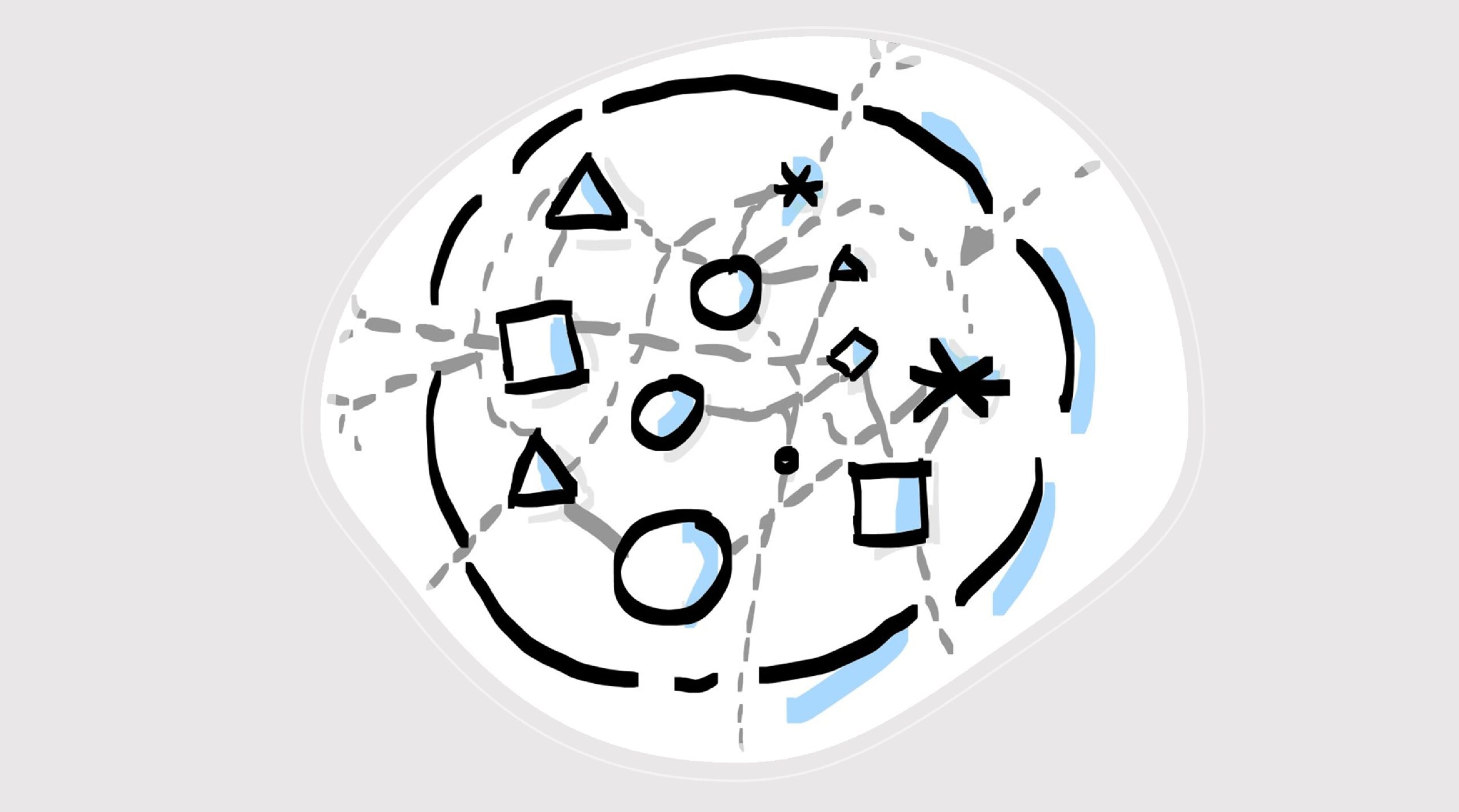
- Ein System ist eine Einheit und kann auch als Einheit wahrgenommen werden.
- Ein System ist abgeschlossen, hat also so etwas wie eine begrenzende Hülle, die von Innen und Außen wahrnehmbar ist.
- Ein System hat dadurch eine Innenwelt und eine Außen- oder Umwelt. (Deshalb gibt es Innensichten und Außenperspektiven).
- Was innnerhalb eines Systems vor sich geht, ist von Außen oft schwer, meistens sogar gar nicht erkennbar. Zumindest nicht mit Sicherheit und/oder im Detail.*
- Was außerhalb eines Systems vor sich geht, ist nur nur von einer (beschränkten) Innenperspektive zu sehen (und oft genug auch gar nicht).
- Systeme bestehen aus mehreren Elementen, die als eigenständige Sub-Systeme gesehen werden können.
- Die Elemente eines Systems sind – teilweise, aber nicht immer (!) – miteinander verbunden. Sie stehen also – teilweise zumindest – miteinander in Beziehungen.
- Diese Beziehungen realisieren sich durch Kommunikationen und Kommunikationsstrukturen (und nur dadurch).
- Austausch und/oder Kommunikationen mit der Außenwelt ist für (die meisten) Systeme (überlebens-) notwendig.
- Dieser Austausch findet ausschließlich über Schnittstellen statt. (Die man sich als „Schleusen“ in der Hülle vorstellen kann.)
Konkrete und Abstrakte Systeme
Hilfreich ist die Unterscheidung in konkrete und abstrakte Systeme. (Auch wenn möglich ist, quasi alle Systeme sowohl konkret als auch abstrakt – sozusagen als Idee oder Gedankenkonstrukt – zu betrachten.)
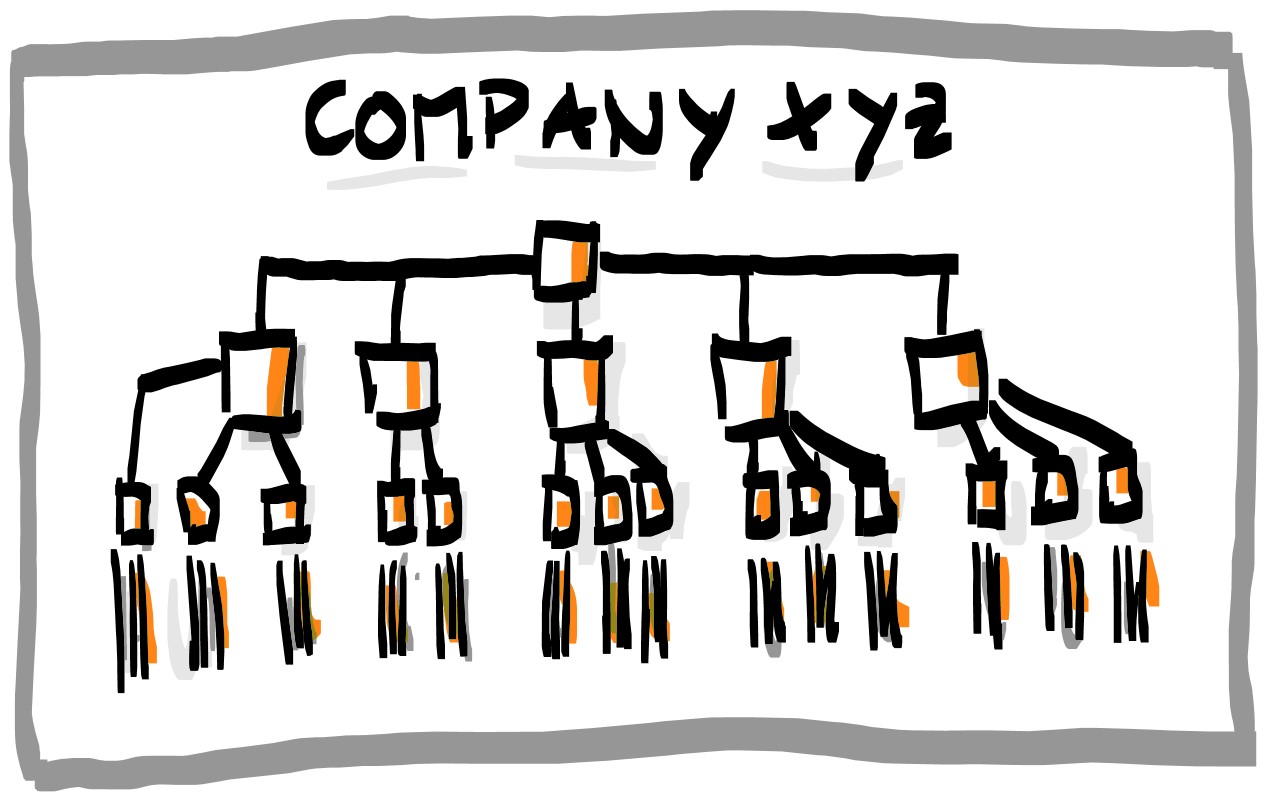
Konkrete Systeme sind Dinge, die man begreifen kann im Sinne von be-greifen. Also z.B. Maschinen oder Lebewesen. Abstrakte Systeme sind Phänomene, die nicht greifbar sind, sondern in unseren Vernunft-, Vorstellungs- oder Gefühlswelten liegen: z.B. Weltbilder, Beziehungen aller Art, Firmenkonstrukte etc.
 Konkrete Beispiele
- Mensch
- Kühlschrank
- Computer
- Bleistift
- Team
Abstrakte Beispiele
- Sprache
- Konflikte
- Weltbilder
- Firma
- Team
- Utopien
- Tagträume
- Wünsche
Zum Verdauen ein bisschen nachdenken
- Was sind nochmal die die wichtigsten Kriterien für ein System?
- Welche Beispiele für konkrete und abstrakte Systeme fallen mir ein?
- Was sind Beispiele für Systemgrenzen?
- Wie lassen sie sich allgemein und konkret beschreiben?
- Was sind Beispiele für Schnittstellen?
- Was braucht es, damit sie gut funktionieren?
- Warum müssen nicht alle Elemente eines Systems verbunden sein?
- Warum habe ich bis hierhin gelesen?
- Warum interessiert mich das alles überhaupt?
Was mir sonst noch dazu einfällt
- Ameln, Falko von: Konstruktivismus. Die Grundlagen systemischer Therapie, Beratung und Bildungsarbeit. Stuttgart, 2004.

- Hacke, Axel: Nächte mit Bosch. 18 unwahrscheinlich wahre Geschichten. München, 2012.
- Simon, Fritz: Einführung in Systemtheorie und Konstruktivismus. Heidelberg, 2008.

There is nothing more practical than a good theory.
Systemic approaches have been around for a while and are currently very popular. The reason for this is a world that seems to be getting more and more complex.
Recently, I have been asked about the topic quite often. I realised again how important systemic thinking and systemic approaches are for me and my work.
At the same time, I have noticed (again) that people find it difficult to understand the concepts behind it. And also how practical it is to know a few basic aspects about it.
All those who have tried to read and understand the grand masters of systems theory have an idea of where this comes from. After all, the subject is very sophisticated and often treated in a very blurred way in terms of language.
Hence the attempt to explain in a small series a VERY big topic with the most crucial points for me.
This is of course a good chance to fail big time. So it is a most appropriate topic for this blog: Challenge Accepted.
These three points we will look at:
- What is a system?
- How do systems work?
- Why is it so relevant and helpful?
So let’s clarify here first:
What is a System?
The most important criteria that describe systems in general are:
- A system is a unit and can also be perceived as a unit.
- A system is contained (container), i.e. it has such a thing as a limiting shell that can be perceived from inside and outside.
- Thus a system has a inside world and a outside or environment. (That is why there are inner and outer perspectives).
- What is going on inside a system is often difficult to identify from the outside, usually not even at all. Or at least not with certainty and/or in detail.
- What goes on outside of a system can only be seen from a (limited) inside perspective (and often enough not at all).
- Systems consist of several elements that can be seen as independent sub-systems.
- The elements of a system are – partially, but not always (!) – connected to each other. They therefore relate to each other – at least in part.
- These relations are realised through communications and communication structures (and only through this).
- Exchanges and/or communications with the outside world is (necessary for survival)for (most) systems.
- This exchange takes place exclusively via interfaces. (Which can be thought of as „locks“ in the shell.)
Concrete and Abstract Systems
It is helpful to distinguish between concrete and abstract systems. (Although it is possible to consider virtually all systems both concrete and abstract – as an idea or thought construct, so to speak).
Concrete systems are things that can be understood in the sense of being grasped. For example, machines or living beings. Abstract systems are phenomena that are not tangible, but lie in our worlds of reason, imagination or feeling: e.g. world views, relationships of all kinds, company constructs, etc.
Concrete examples.
- People
- Refrigerator
- Computer
- Pencil
- Team
Abstract examples
- Language
- Conflicts
- Worldviews
- Company
- Team
- Utopias
- Daydreams
- Wishes
A Few Questions for You to Help You Digest
- What are the most important criteria for a system again?
- What examples of concrete and abstract systems can I think of?
- What are examples of system boundaries?
- How can they be described in general and concrete terms?
- What are examples of interfaces?
- What does it take to make them work well?
- What could be the reason why not all elements of a system are directly connected?
- Why have I read this far?
- Why am I even interested in all this?
What Else Comes to My Mind?
- Ameln, Falko von: Constructivism. The foundations of systemic therapy, counselling and educational work. Stuttgart, 2004.
- Hacke, Axel: Nights with Bosch. 18 unlikely true stories. Munich, 2012.
- Simon, Fritz: Einführung in Systemtheorie und Konstruktivismus. Heidelberg, 2008.