Projekte funktionieren nur, wenn Menschen mitmachen. Wie bekommt man sie dazu? Be easy to follow. Ganz einfach. Oder?
“There is no movement without the first follower.”
Dieser Satz ist im sehenswerten, kurzen Youtube-Video “How to start a movement” von Derek Sivers zu hören, das es zu gewisser Berühmtheit schaffte./1/
Die Kernbotschaft: Tolle Ideen werden noch toller mit Leuten, die mitmachen.
Das leuchtet ein. Umso erstaunlicher, dass in so vielen Projekten und Veränderungs-Vorhaben die Frage stiefmütterlich behandelt wird, wie Menschen für die Sache gewonnen werden.

Und das, obwohl so viele Entscheider in vielen Experten-Zirkeln gründlich über viele wichtige (und weniger wichtige) Details beraten: Roadmap, Meilensteine, Arbeitspakete, Deadlines. Hintergrund und Sinn werden sich dann schon auf geheimnisvolle Art von alleine erschließen, und die KollegInnen magisch motiviert zur Tat schreiten.
Der bloße Projektauftrag aber, die nackte Information reicht heute selten aus, damit Mitarbeitende blind gehorchend, engagiert und zielgerichtet tun, was man ihnen anschafft. Das ist auch gut so. Denn Fachexperten, die täglich die wertschöpfende Arbeit verrichten, denken auch im Großen mit. Es gehört zu ihrem Job, zu überlegen, bevor sie etwas tun. Damit sie vieles richtig und wenig falsch machen. Das ist ihr Anspruch, und dafür werden sie auch bezahlt.
Wie also werden sie, deren Engagement man im Projekt dringend braucht, zu Followern?
“A movement needs to be public.”
Das Vorhaben muss für alle sichtbar und leicht zugänglich sein. Öffentlichkeitsarbeit für die eigene Sache ist zu betreiben. Mit moderner Nettigkeit oder Demokratisierung von Vorgängen hat das nichts zu tun. Sondern schlicht damit, dass Menschen nur so mit größtem Einsatz mitmachen können.
Denn Menschen wollen nicht nur gerne selbst entscheiden, ob etwas für sie und andere sinnvoll ist, ob sie also mitziehen. Sie müssen das tun. Denn das ist unser (evolutionäres) Erfolgsmuster.
Sofern es gute (!) Gründe für ein Vorhaben gibt, hat kein Entscheider
… Stakeholder oder auch keine Projektgruppe etwas zu fürchten. Im Gegenteil. Die Angesprochenen werden sich früher oder später aus Überzeugung dem dann ja guten Projekt zuwenden und es unterstützen. Wir Menschen wissen nämlich sehr genau (s.o.): Sinnhafte soziale Kooperation – dazu gehört Teamarbeit im Allgemeinen – verschafft uns Vorteile. Sie gibt uns Sicherheit.
Deshalb prüfen wir Menschen immer und meist unbewusst, ob einer Sache selbst und den Menschen, die für sie stehen, zu trauen ist: Ist das alles gut? Ist das vertrauenswürdig? Läuft es in eine gute Richtung? Kann ich mich dem anschließen? Wer ist noch dabei? Lohnt es, sich zu engagieren?
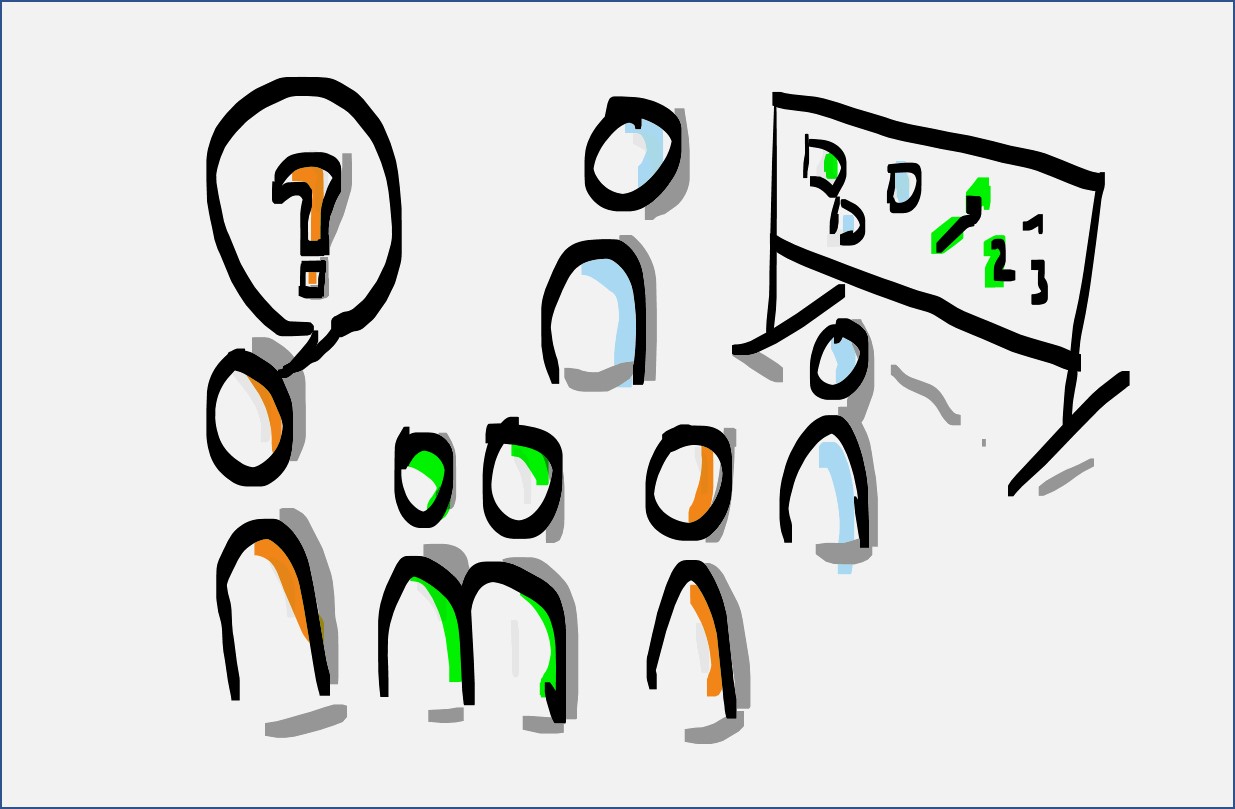
Das braucht Zeit. Und Gelegenheiten. Also Situationen, in denen wir Antworten auf unsere Fragen bekommen und Vertrauen aufbauen können.
Persönlicher oder auch organisatorischer Sinn oder Vertrauen entstehen nicht durch Reden, Zuhören, Versprechungen oder Glaube, sondern einzig durch Erleben. Das müssen wir dann auch wiederholt: Erleben. Nicht nur lesen oder hören. Am eigenen Leibe erfahren, dass eine Sache wichtig, gut und also: sinnhaft ist.
Walk your talk
Wer will, das man ihm oder ihr vertraut und folgt, muss deshalb mit (gutem!) Beispiel vorangehen, also “Walk your Talk” betreiben. Immer wieder ist zu beweisen: “Wir meinen es ernst, wir wollen das und brauchen euch dafür. Es ist (uns) dringend und wichtig. Deshalb sind wir auch bereit, uns selbst zu engagieren, reinzuhängen oder uns auch zu verändern.”
Führen und Sich-führen-Lassen sind nur so möglich: Durch Vorleben dessen, was man selbst einfordert.
Bleibt das aus
… oder – schlimmer noch – wird das eine gesagt und das andere getan, ist dies für alle (!) das sichere (!) Zeichen, dass die Angelegenheit nicht wichtig, nicht ernst gemeint, vielleicht sogar ein gefährlicher Nepp ist. Also: Besser nicht darauf einlassen! Könnte gefährlich sein. Zeit- und Energieverschwendung. Unattraktiv. Unnütz. Die Sache wird so abgebrochen, bevor sie beginnt.
“Walk your Talk”, Führen durch Vorbild, ist also fraglos ein entscheidendes Prinzip für den Erfolg unternehmerischer Vorhaben. Alle, die für Projekte begeistern wollen, die sie führen, anleiten, anschieben, haben es zu befolgen: Führungskräfte, Projektleiter, Projektgruppen…
Doch Vorleben – walk your talk – alleine reicht nicht aus.
Talk your walk gehört eben auch dazu. Denn wer nicht gesehen wird, kann kein Vorbild sein. Wer sich aufmacht, ohne es anzukündigen, wird alleine gehen. Wer von einer Bewegung nichts mitbekommt, kann sich ihr nicht anschließen.
 Be easy to follow!
Deshalb wird jedes erfolgreiche Vorhaben von Anfang bis Ende (!) mit einem ehrlichen, offenen und erwachsenen Austausch darüber begleitet. Immer wieder werden öffentlich die Ziele, Ideen, Hintergründe und Planungen erläutert, diskutiert, angezweifelt, ergänzt, verändert. Dadurch wird das Projekt sichtbar und es entwickelt sich, es wird besser. Indem man zeigt, welche Entscheidungen anstehen, welche Überlegungen es dazu gibt. Indem Fragen geklärt, Feedback eingeholt und gemeinsam entschieden wird. Viele Mittel stehen dafür zur Verfügung. Leichtgängige, unkomplizierte und vor allem interaktive Formate sind dazu besser als aufwendige Einweg-, Verkaufs- oder Überzeugungs-Formate. Es geht schließlich um Austausch.
Wenn auch Sie für erfolgreiche Ergebnisse in Projekten verantwortlich sind, veranstalten Sie also Projekt-MeetUps, Open Spaces, Townhall-Meetings. Informieren Sie regelmäßig im Projekt-Blog oder im Projekt-Podcast. Berichten Sie in der Mitarbeiterzeitung oder im Intranet über den Stand. (Gibt es eigentlich noch das schwarze Brett?) Veranstalten Sie regelmäßige öffentliche Projekt-Retrospektiven oder Fuck-Up-Nights. Zeigen und diskutieren Sie öffentlich, was Sie gemeinsam erreicht, was sie gemeinsam gelernt haben. Und feiern Sie das gemeinsam und öffentlich. Kurz: Machen Sie es sich und anderen möglichst leicht, sich gerne der Sache anzuschließen!
Be easy to follow. Walk your talk. Talk your walk. Alles dieselbe Sache.
Projects only work when people are involved. How do you get them to participate? Be easy to follow. Very simple, isn’t it?
„There is no movement without the first follower.“
This can be heard in the worth seeing and a bit famous YouTube video „How to start a movement“ by Derek Sivers.
The core message, easy to understand:
Great ideas become even greater with people who participate. Isn’t it surprising, that in so many projects and change initiatives the question of how to attract people to the cause is treated like a neglectable topic?
And this, even though so many decision-makers in many expert circles thoroughly discuss many important (and probably not so important) details: Roadmap, milestones, work packages, deadlines, etc. The purpose and background of all this will mysteriously unfold on their own. And then colleagues will magically take the right action.
However, the mere project assignment, the bare information today is rarely enough for employees to blindly obey, engage and purposefully do whatever seems to be the order. That is a good thing. Because experts, who do the value-adding work every day, also consider the big picture. It is quite simply part of their job to think before they do something. So that they do many things right and few things wrong. That is their ambition. And it’s what they get their money for.
So how to turn them into followers? How to involve the people, whose commitment we so urgently need?
„A movement needs to be public.“
The project must be visible and easy to access to everyone. Public relations work must be done! That has nothing to do with zeitgeisty friendliness or democratization of processes. Quite simply, it is because it is the only way people CAN participate with commitment.
People do not only WANT to decide whether something is meaningful for them and others, whether they want to or perhaps should participate. They MUST do that. It’s our (evolutionary) success pattern.
Provided there are good (!) reasons
… no decision-maker, stakeholder, or project group has anything to fear. On the contrary! Sooner or later, people will turn to the project out of conviction and support it. We, humans, know very well (see above): meaningful social cooperation – which includes teamwork in general – gives us advantages. It gives us security.
Hence, people always and mainly unconsciously check whether they can trust a thing or people who stand for it: Is all of this good? Is it trustworthy? Is it all going in the right direction? Can I agree with that? Who else is in? Is it worthwhile to get involved?
This takes time. And opportunities. In other words, situations in which we can get answers to our questions and build trust.
Personal or even organizational meaning or trust is not created by speaking, hearing, promising or believing, but solely by experiencing. And this repeatedly: Experiencing and not just reading or hearing that something is relevant, important, good, and therefore: meaningful.
Walk your talk!
So if you want to gain the trust of others, if you want him or her to follow, you must set a (good!) example: „Walk your Talk“! Again and again, you have to prove: „We mean it, we want it, we need you! It is urgent and important for us and all of us. That’s why we ourselves are engaged. We are willing to get involved. And we are also willing to change.“
Leading and being led is only possible this way: By setting an example of what you are asking for or demanding.
If you fail to do so or
… worse still you say one thing and do the other, this is the sure (!) sign for everyone (!) that the matter is NOT urgent, NOT relevant, NOT meant seriously, maybe even a dangerous rip-off. So: Best not to get involved! Could be dangerous. A waste of time and energy. Unattractive. Useless. Stopped before it starts.
So „Walk your Talk“, leading by example, is undoubtedly a decisive principle for the success of entrepreneurial or any other venture. Everyone whose job is to manage, instruct, push projects, managers, project managers, project groups, stakeholders of any kind: they all have to follow this principle.
Being a role model – walk your talk – won’t be enough, though.
Talk your walk is a very important part, too. Because: If you are not visible, you hardly can be a role model. If you set off without announcing it, you will go on your own. If you don’t hear about a movement, you hardly can join.

Be easy to follow!
Therefore, every successful undertaking should be accompanied from beginning to end (!) by an honest, open, and adult exchange about it. Again and again, the goals, ideas, background, and planning need to be explained, discussed, questioned, supplemented, changed. Publicly.
It makes the whole venture visible. And it develops, it becomes better. By showing the decisions pending, the considerations. By clarifying questions, obtaining feedback, and making joint decisions.
There are a lot of tools available for this.
Smooth-running, uncomplicated, and above all interactive formats are better than elaborate „one-way“ or „sales or persuasion“ formats. After all, it is all about exchange.
So if you are responsible for successful results in projects, organize project meetups, open spaces, town hall meetings, brown-bag sessions. Write a project blog regularly or inform in a project podcast. Report on the status in the company magazine or the intranet. (Is there still a message board?) Organize regular public project retrospectives or fuck-up nights. Show and discuss publicly what you have achieved together, what you have learned together. And celebrate this together and openly. In short: Make it as easy as possible for yourself and others to join in!
Be easy to follow. Walk your talk. Talk your walk. All the same thing.