Wer anfangen möchte (oder muss) agil zu arbeiten, hat meist viele Fragen. Einige sehr gute und nachvollziehbare Exemplare davon werden mir gelegentlich gestellt. Zum Beispiel diese:
Woran scheitert Agilität aus Ihrer Sicht am häufigsten?
Agilität ist erfunden worden um – im abgesicherten Rahmen – Fehler zuzulassen.
Agilität betrachtet Fehler als etwas, aus dem wir lernen können. Und Lernen ist: GUT! Wenn agile Change-Vorhaben scheitern, dann oft daran, dass das nicht verstanden wurde.
Und das ist – von Außen betrachtet – ein bisschen komisch. Denn so betrachtet MUSS Agilität scheitern. Und zwar immer wieder!
Ob sich Teams oder gar ganze Unternehmen tatsächlich agil entwickeln
… hängt deshalb stark mit ihrem Erkenntnislevel und Reifegrad zusammen. Sind sie noch in der maschinenhaften, prozesshaften, „komplizierten“ Welt verhaftet, die z.B. an Lösung und Leistung durch Effizienz oder den Ausbau von Einzelleistungen etc. glaubt, werden die Menschen dazu neigen, Agilität entsprechend dieses Weltbildes einzuführen.
Das heißt: eher als „effizienten“ Prozess. Bis zu einem gewissen Grad ist das sogar möglich. Schließlich haben agile Routinen ja sogar sehr viel Prozesshaftes.

Menschen als Experten ihrer eigenen Arbeit
… sind jedoch generell sehr intelligent. Und das gilt vor allem für soziale Vorgänge und organisatorische Strukturen. Mesnchen merken also schnell, ob es um eine tatsächliche und wesentliche Veränderung in der Zusammenarbeit gehen soll oder ob sie lediglich einen neuen, diesmal eben „agilen Marschbefehl“ erhalten, der an den grundsätzlichen (Macht- und Entscheidungs-) Strukturen nichts ändern soll, nach dem Motto: „Ab morgen 100% Agile!“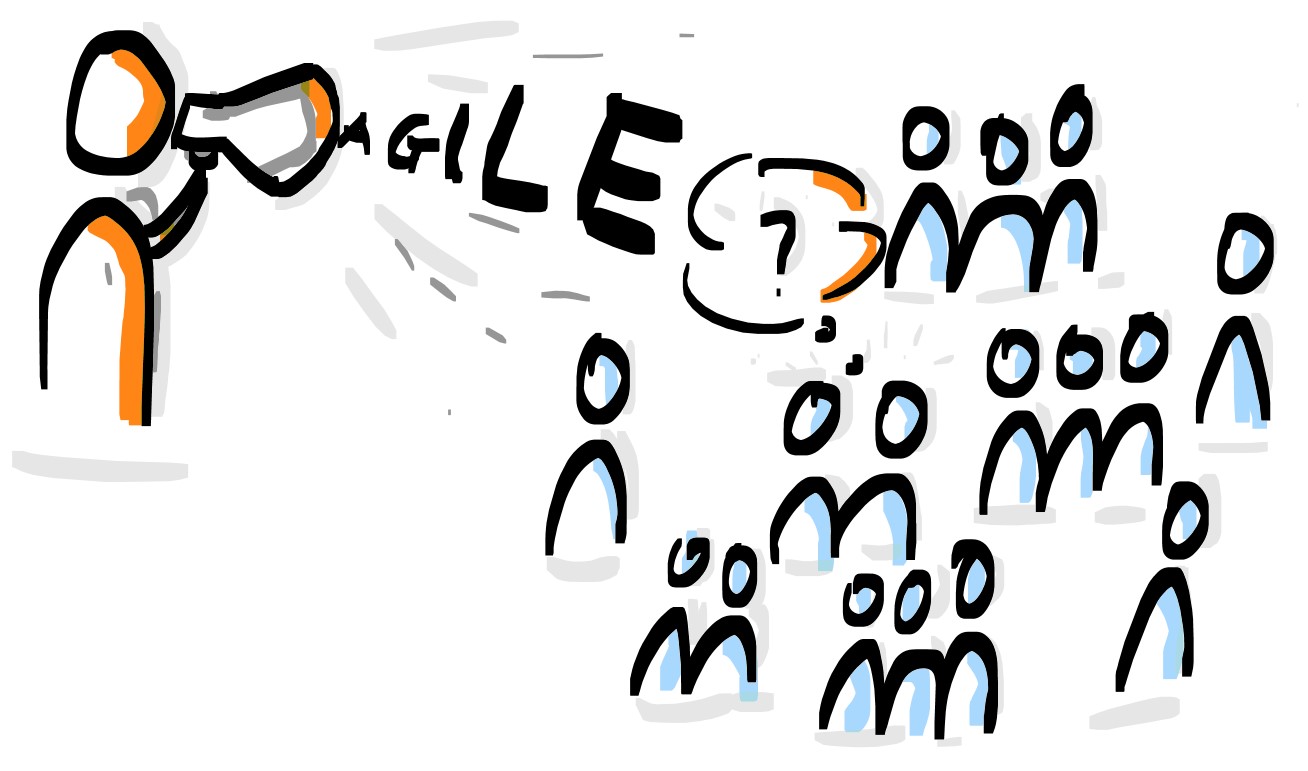
Zumindest viele motivierte und an guter Sachleistung interessierte
… Mitglieder einer Organisation kommen sich dann veräppelt vor – oft auch zu Recht. In diesem Fall geschieht, was augenscheinlich gerade vermieden werden sollte: Teams sind dann oft auf längere Zeit mit sich selbst beschäftigt und in unguten Konflikten verstrickt.
Das lenkt sie von der wichtigen Frage ab: Wie werden wir wieder erfolgreicher? Wie sichern wir unser Geschäft nachhaltig? Und der Kunde schaut sich mittlerweile nach einem anderen Lieferanten um.
Das Alles deutet natürlich
… auf einen der wichtigsten Punkte hin, warum agile Veränderungsprozesse oft scheitern:
Führungskräfte schaffen oft nicht die Rahmenbedingungen, die agiles Arbeiten erfordert.
Die Gründe hierfür sind vielfältig. Zum Beispiel scheint es, als beschäftigen sich ManagerInnen nicht oder nur oberflächlich mit Agilität als Organisationsform, die sie da gerade einführen lassen.
Die Frage, wie sie sich in ihrem Führungsverhalten und in ihrer Managementrolle anpassen müssten, scheint sie oft nicht zu interessieren. Ein gewisses Desinteresse oder ostentatives Unwissen ist also oft spürbar vorhanden.
Ein weiterer Grund ist
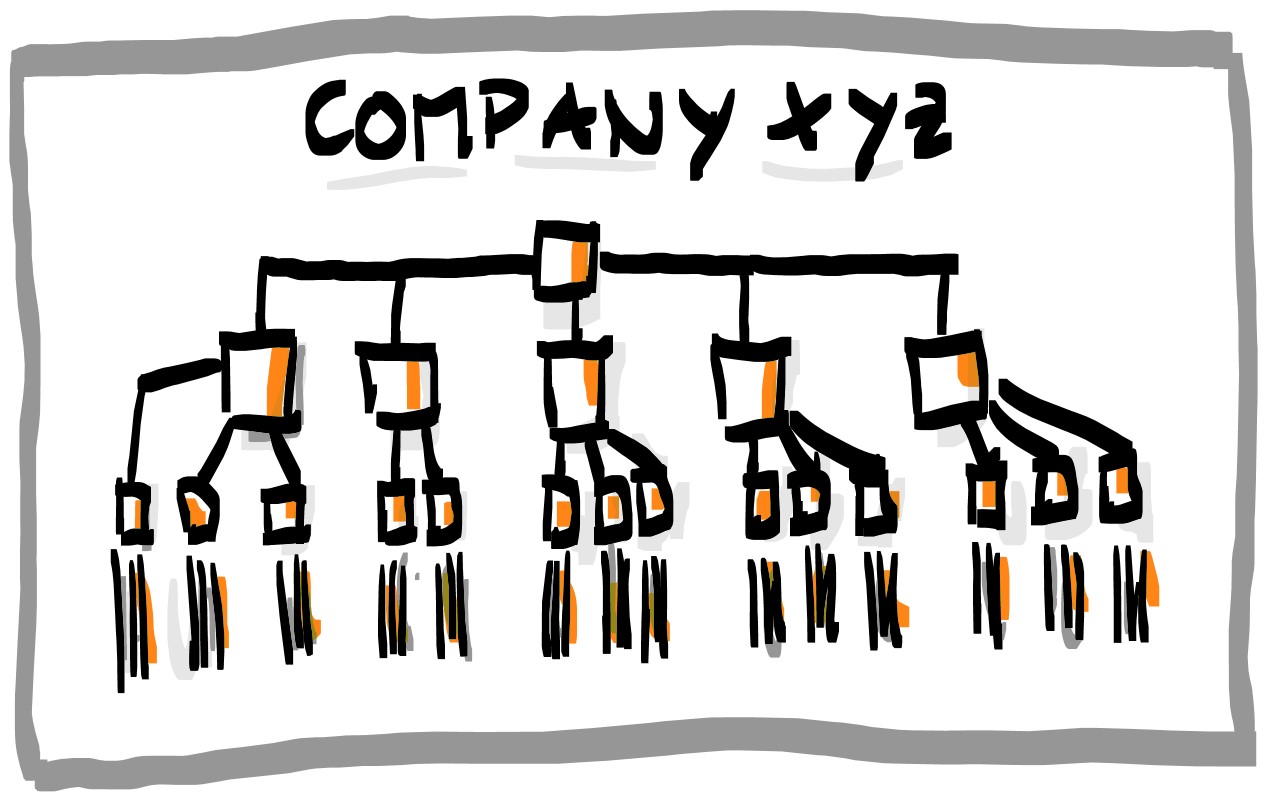
… natürlich Machtgehabe und Festhalten an den gewachsenen Machtstrukturen. Und bei allen Machtspielchen kann man auch hier eine ausgeprägte Selbstunsicherheit und mangelndes (Selbst-) Vertrauen vermuten. Oder auch schlicht eine riesengroße Angst vor Entdeckung, Kontroll-, Existenz- und Bedeutungsverlust.
Das ist besonders bitter.
Denn eigentlich brauchen wir überall, aber gerade in selbstorganisierten agilen Organisationen ein starkes, selbstbewusstes Management. Und eben kein kontrollierendes, misstrauendes, auf Effizienz getrimmtes Mikro-Management. Und schon gar kein egozentrisches, egoistisches, macht- oder statusgetriebenes.
Gefragt ist ein visionäres, vertrauensvolles, der Sache und der Menschen (und damit der Wertschöpfung) verpflichtetes und dienendes Management, das dafür sorgt, dass die Experten inhaltlich gute Arbeit leisten können. Im Sinne des Kunden.
All das gilt übrigens umgekehrt auch für die Teammitglieder, die sich mit der neuen Verantwortung ihrerseits oft schwer tun.
Mein Eindruck ist
… dass schlicht noch zu wenige Menschen in der Lage sind, auf diese Weise zu denken, zu führen, zu arbeiten.
Und das könnte auch noch länger so bleiben. Denn wir sind alle in einer anderen, ko-abhängigen Art sozialisiert und es ist nicht erkennbar, dass sich daran schnell etwas ändert.
Und so fehlen uns die entsprechende Ausbildung, die überzeugte Haltung und auch das (Selbst-) Vertrauen, die es für selbstorganisiertes, agileres Arbeiten braucht.
Zudem besteht ein sehr hoher sozialer Gruppendruck
…vor allem, aber längst nicht nur (!) in den Managementkreisen, der verhindert, dass sich die statusgetriebene Organisationskultur in Richtung Agilität bewegt.
Es wäre schön, wenn das nur bedauerlich wäre. Es ist aber mehr. Nämlich sehr gefährlich. Denn so verharren wir in unseren stabilen Prozessen.
 Es wäre schön, wenn das nur bedauerlich wäre. Es ist aber mehr. Nämlich sehr gefährlich. Denn so verharren wir in unseren stabilen Prozessen.
Betrachtet man den starken disruptiven Wettbewerbsdruck, der enorm groß ist und von dem wir ja annehmen dürfen, dass er eher noch größer als kleiner wird, kann es einem schon ein bisschen blümerant werden.
Denn so können agil organisierte Firmen unseren hierarchisch geprägten Betrieben (mit einer aus meiner Sicht geradezu skandalösen Leichtigkeit) weiterhin munter die Butter vom Brot nehmen. Und das sogar oft, ohne dass die Betroffenen das bemerken oder in irgendeiner Form verstehen, was vor sich geht.
Das ist ein enormes wirtschaftliches und manchmal sogar existentielles Risiko.
Vielleicht muss das der erste Fehler sein – die erste Krise – unseres agilen Veränderungsvorhabens, aus dem wir dann lernen. Das Experiment könnte riskanter und teurer sein, als dem ein oder anderen Stakeholder lieb ist. Und vielleicht auch uns selbst?
Was mir sonst noch dazu einfällt
- Appelo, Jurgen: How to Change the World
- Emiliani, Bob: The Triumph of Classical Management Over Lean Management. How Tradition Prevails and what to Do about it.
- Laloux, Frederic: Reinventing Organizations.
- Logan, Dave: Tribal Leadership.
- Snowden, Dave: The Cynefin Framework, Youtube-Video vom 11.07.2010
- Sutherland, Jeff: Die Scrum-Revolution
- Verhaeghe, Paul: Autorität und Verantwortung.
Whoever wants (or needs) to start working agile usually has a lot of questions. Some very good and comprehensible examples of them I am occasionally asked. For example, these:
What do you see as the most common reasons why Agile fails?
Agile was invented to allow mistakes – within a secured environment.
Agile considers mistakes as something we can learn from. And learning is: GOOD! When agile change projects fail, it is often because this was not understood
And that is – viewed from the outside – a little funny. Because viewed in this way, agile MUST fail. Again and again!
Whether teams or even entire companies actually develop Agile
… therefore strongly depends on their level of awareness and maturity. If they are still entrenched in the machine, process, „complicated“ world that believes, for example, in solution and performance through efficiency or the expansion of individual performance, etc., people will tend to introduce Agility according to this worldview.
That is: more as an „efficient“ process. To a certain extent, this is even possible. After all, Agile routines even have a lot of process-ness to them.
People as experts of their own work
… however, are generally very intelligent. And this is especially true for social processes and organizational structures. So people quickly notice whether it is about an actual and significant change in collaboration or whether they are merely given a new, this time “ Agile marching orders“, which should not change anything in the fundamental structures (of power and decision-making), according to the motto: „From tomorrow 100% Agile!“
At least many motivated and interested in good in-kind performance
… members of an organization will feel fooled – and often rightly so. In this case, it happens to be what should obviously be avoided: teams are then often preoccupied with themselves for a longer period of time and entangled in unpleasant conflicts.
This distracts them from the important question: How do we become more successful again? How do we secure our business in the long term? Meanwhile, the customer is looking around for another supplier.
This all indicates, of course
…at one of the most important points why agile change processes often fail:
Leaders fail to create the framework conditions that agile working requires
There are many reasons for this. For example, it seems as if managers do not engage or engage only superficially with Agile as an organizational form, which they have just introduced there.
The question of how they would have to adapt in their leadership behavior and in their management role often does not seem to be of interest to them. So a certain lack of interest or ostentatious ignorance is often evident.
Another reason is
… of course, mindless power play and clinging to established power structures. And with all the power games, one can also suspect a pronounced self-uncertainty and lack of (self-) confidence. Or simply a giant fear of discovery, loss of control, existence and significance.
This is particularly bitter.
Because actually we need a strong, self-confident management anywhere, but especially in self-organized agile organizations. But just no controlling, distrusting micro-management trimmed for efficiency. And certainly no egocentric, selfish, power- or status-driven one.
What is needed is a visionary, trusting management committed to the cause and the people (and thus the value creation) and serving, which ensures that the experts can do a good job in terms of content. In the sense of the customer.
By the way, all this also applies in reverse to the team members, who often have a hard time with the new responsibility on their part.
My impression is
… that simply too few people are still able to think, lead, work in this way.
And that could remain that way even longer. Because we are all socialized in another, co-dependent way and we can‘ t see that this will change quickly.
And so we lack the appropriate training, the convicted attitude, and also the (self-)confidence that it takes to work in a more self-organized, Agile way.
In addition, there is a very high level of social peer pressure
…especially, but by no means only (!) in management circles, which prevents the status-driven organizational culture from moving in the direction of Agile.
If we consider the strong disruptive competitive pressure, which is huge and of which we may assume that it will rather increase than decrease, it can be a bit scary.
This is because agilely organized companies can continue to outstrip our hierarchically structured companies (with what I see as downright scandalous ease). And that even often, without the people concerned noticing or in any way understanding what is going on.
This is an enormous economic and sometimes even existential risk
Perhaps this must be the first mistake – the first crisis – of our agile change effort, from which we will learn. The experiment could be riskier and more expensive than some stakeholders would like. And maybe even ourselves?
What else comes to mind
- Appelo, Jurgen: How to Change the World
- Emiliani, Bob: The Triumph of Classical Management Over Lean Management. How Tradition Prevails and what to Do about it.
- Laloux, Frederic: Reinventing Organizations. A Guide to Creating Organizations. Inspired by the Next Stage of Human Consciousness.
- Logan, Dave: Tribal Leadership.
- Snowden, Dave: The Cynefin Framework, Youtube video from 11.07.2010
- Sutherland, Jeff: Scrum. The Art of Doing Twice the Work in Half the Time, New York, 2014.