„Du kennst dich doch da gut aus. Kannst du das den anderen nicht mal zeigen?“ Kommen auch Sie manchmal auf diese Art dazu, Ihre KollegInnen zu briefen? Dann sind Sie in guter Gesellschaft: Die meisten deutschen Unternehmen bauen auf diese Art von Wissensvermittlung. Leider aber fehlen oft die Methoden, Wissen gut zu vermitteln. Deshalb hier ein Mini-Train-the-Trainer.
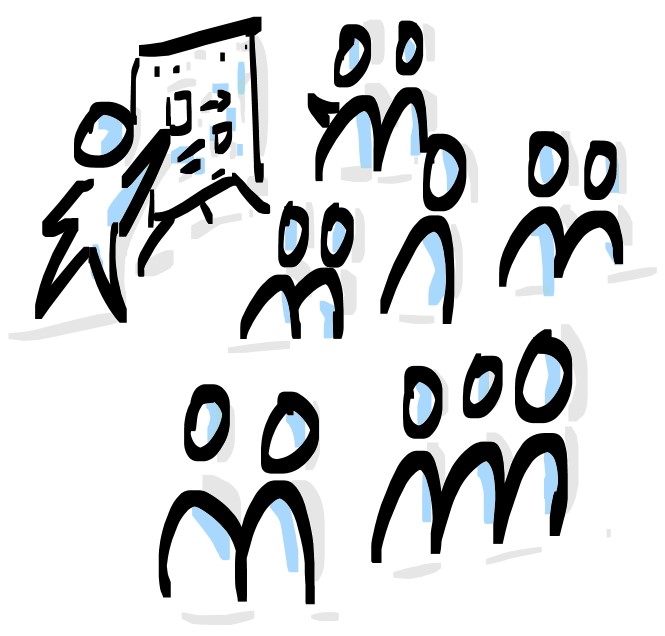
Wer jemals einen Workshop oder eine Schulung vorbereitet
und gehalten hat, weiß: Wissen an die Frau oder den Mann zu bringen kann ganz schön schwer sein. Wie lassen sich die vielen Inhalte nur am besten vermitteln? Wie schaffe ich es, alle Teilnehmer- und ZuhörerInnen ins Boot zu holen?
Wenn es darum geht, Wissen und Informationen zu vermitteln, bietet die Methode 4MAT® eine große Hilfe. Mit ihr lassen sich Inhalt und Struktur eines Vortrags, eines Workshops oder auch einer Präsentation auf jedes Publikum gut anpassen. Das 4MAT®-Trainingsdesign ist nachvollziehbar, eingängig, leicht zu lernen und nicht nur für Profis bestens geeignet, sondern auch für „Gelegenheits-Trainer“ (/1/).
Lerntypen bzw. -stile
Grundsätzlich geht die Methode davon aus, dass es vier verschiedene Lerntypen bzw. –stile existieren. Diese sind ALLE in JEDEM Menschen angelegt, allerdings unterschiedlich stark vertreten. Menschen haben also eindeutige Vorlieben:
- Why: Menschen, die hauptsächlich mit diesem Lernmuster ausgestattet sind, stellen beim Lernen die Frage, warum sie sich mit diesem Thema befassen sollen. Nur wenn sie darauf eine Antwort bekommen, ist das Thema für relevant und sie sind motiviert zu lernen. Falls nicht, führt das im schlimmsten Fall dazu, dass sie die Informationsaufnahme komplett verweigern.
- What: What-Lerntypen sind sehr an der GESAMTEN Theorie interessiert. Je universeller, je mehr Details, desto besser! Sie brauchen möglichst viele, genaue Informationen und Hintergrundinformationen. Andernfalls sind sie schnell gelangweilt und schalten ab.
- How-to: Menschen mit How-To-Lernmuster möchten selbst ran. Sie möchten die Dinge ausprobieren. Am besten lernen sie, indem sie Neues selbst tun und so ihre eigenen (Lern-) Erfahrungen machen können.
- What-if: What-if-Menschen sind die Unternehmer unter den Lernen. Sie denken insofern „unternehmerisch“, indem sie fragen, was sie mit dem Lernstoff anfangen können, was es ihnen bringt und auch, wo ihnen das Neue über den eigentlichen Anwendungszweck hinaus helfen könnte. Sie fragen gerne: „Welchen Zusatznutzen hat das Thema? Wo und wie?“ Dabei werden sie kreativ und denken sofort über Anpassungen nach.
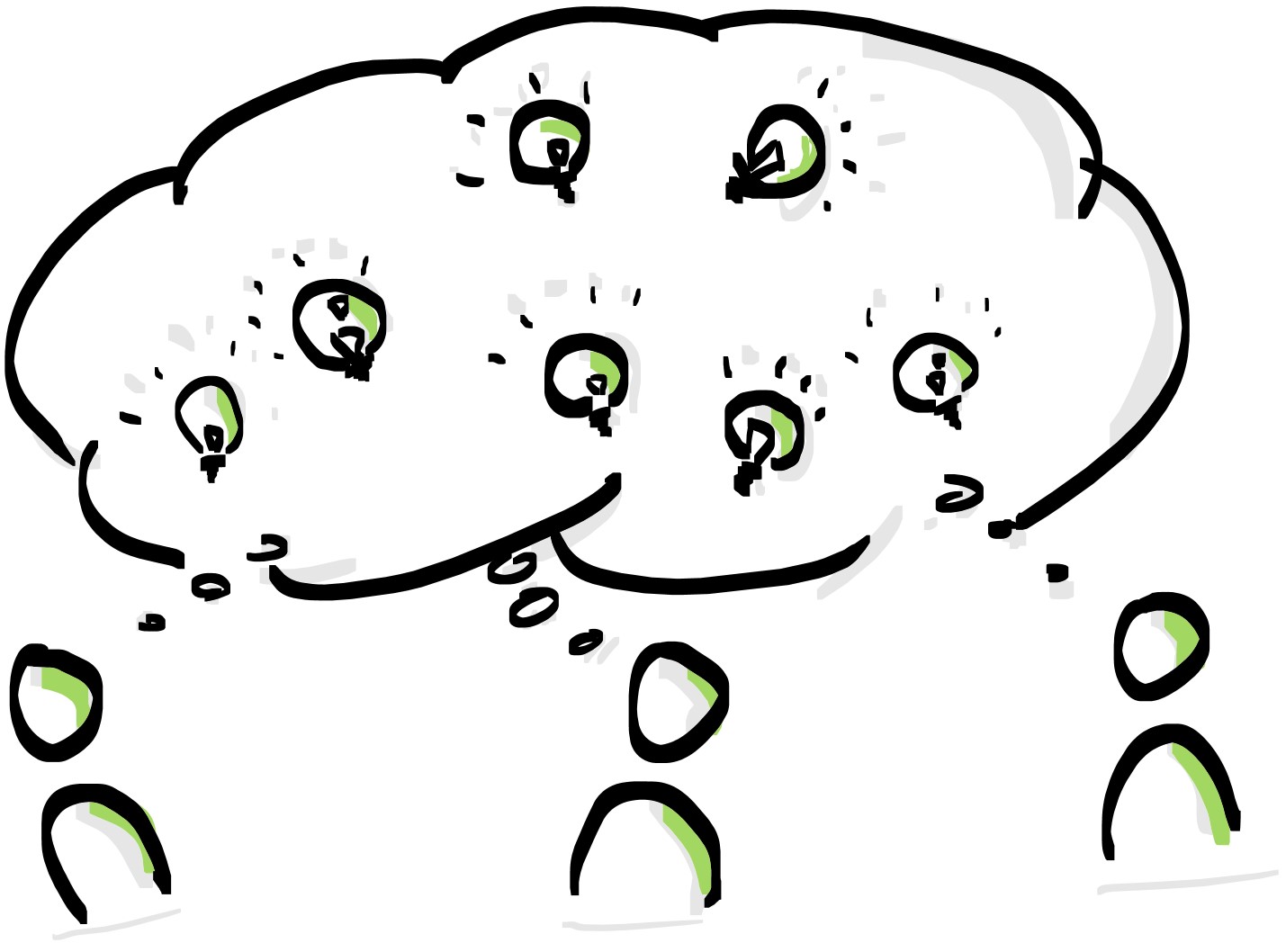
Zwar wissen wir oft…
…WER an den Schulungen teilnimmt. Aber es ist nur schwer möglich, vor der Veranstaltung einzuschätzen, WER im Publikum WELCHEN Lernstil bevorzugt. Wüssten wir das, könnten wir leicht entscheiden, ob z.B. ein theoretischer Vortrag richtig für die Gruppe ist oder ein Hands-On-Workshop.
Da alle Menschen aber sowieso IRGENDWIE mit allen vier Lernstilen ausgestattet sind – nur eben mit unterschiedlichen Ausprägungen – ist hilfreich (und auch notwendig), wenn Sie im Zuge der Veranstaltung alle vier Lernstile ansprechen. Die 4MAT®-Methode arbeitet mit einem „LERNZIRKEL„, der die Stile der Reihe nach abschreitet:
1. Why – Motivation (Engage): Warum soll ich mich damit befassen?
Im ersten Schritt geht es darum, die TeilnehmerInnen zu motivieren, sich mit dem Thema zu befassen. Hier sind die Fragen zu beantworten, um was es geht und vor allem (!): Warum das Thema wichtig ist. Für das Publikum/die Organisation/jeden Einzelnen.
Je emotionaler Ihnen die Ansprache gelingt, desto mehr Aufmerksamkeit werden Sie in der Gruppe haben. (Hilfreich und besonders effektiv ist hier die WERTE der Gruppe anzusprechen – sofern Sie sie kennen, natürlich.)
2. What – Information (Share): Um was geht es genau?
Der THEORETISCHE INPUT mit Informationen findet jetzt statt. Ihre inhaltliche Autorität, Ihre „Expertenmeinung“ ist gefragt. Balancieren Sie unbedingt aus, wieviel Information Sie in die Gruppe „kippen“: Bei zu wenig schalten die informationshungrigen What-Typen ab, bei zu vielen Informationen verlieren Sie die praktischen How-To-Typen.
3. What-if – Übungsteil (Practice): Lass mich mal ran!
Lassen Sie nun die Gruppe ausprobieren. Der Spirit sollte jetzt sein: „Jetzt versuchen wir es mal GENAU so, wie es uns der Experte sagt.“ In Seminaren werden an diesem Punkt z.B. Übungen, Gruppenarbeiten oder Diskussionen gemacht. In Computer-Schulungen klicken die Nutzer jetzt durch das Programm. Haben Sie keine Möglichkeit für einen Praxisteil, diskutieren Sie zumindest, wie die Anwendung in der Praxis aussähe.
4. How- to – Transfer (Perform): Wie bringt mich das weiter?
Der letzte Schritt im Lernzirkel ist die Frage: „Was fangen wir mit dem Gelernten in Zukunft an? Wie können wir das Gelernte integrieren?“ Das Motto der Gruppe ist jetzt idealerweise: „Und jetzt versuche ich es auf meine/unsere Art und Weise!“
Der Effekt ist einerseits, dass zum Abschluss jede und jeder für sich selbst verinnerlicht, was er oder sie gerade gelernt hat. Zum anderen wird das Gelernte gedanklich in die Zukunft und in die eigenen Abläufe projiziert. Das ist eine Mentaltechnik und sorgt dafür, dass das gerade Gelerntes noch mehr verankert wird.
Wenn Sie in diesen vier Schritten vorgehen, wenden Sie gleich mehrere hilfreiche Tricks an: So ist z.B. belegt, dass Lernerfolg nur dann dauerhaft ist, wenn wir eine emotionale Verbindung zum Thema haben und sozusagen auch mit dem Herz dabei sind, wir beim Lernen also für uns einen persönlichen Sinn erkennen. Das wird im Why-Schritt sichergestellt.
Außerdem bedeutet Lernen, dass Verschaltungen gebildet werden, also Synapsen im Gehirn. Einmal angelegt, werden diese Verschaltungen immer besser, je öfter sie benutzt werden. Das stellen Sie sicher, indem Sie die Schritte des Modells folgen. So beschäftigt sich die Gruppe mehrmals und auch noch auf jeweils unterschiedliche Art und Weise mit den Inhalten.
Ursprünglich wurde 4MAT® für die Erwachsenenbildung entwickelt.
 ANWENDBAR…
 ANWENDBAR…
…ist diese Methodik aber natürlich überall, wo es darum geht, Informationen zu überbringen und (Re-) Aktionen möglichst nachhaltig anzustoßen. Also z.B. in E-Mails, Berichten, Reden, in Sitzungen, Kundengesprächen und Telefonaten.
Im Zentrum stehen die Fragen, die in jeder gelungenen Kommunikation gestellt werden sollten. Und auch beantwortet, nämlich:
- Warum ist ein Thema wichtig für den Empfänger?
- Um was geht es im Detail?
- Welche Praxisrelevanz hat das Thema?
Was mir sonst noch dazu einfällt
- Bowman, Sharon: Training from the Back of the Room!: 65 Ways to Step Aside and Let Them Learn
- McCarthy, Bernice, O’Neill-Blackwell, Jeanine: Hold On, You Lost Me! Use Learning Styles to Create Training That Sticks
- McCarthy, Bernice, McCarthy, Dennis: Teaching Around the 4MAT® Cycle.
- Vigenschow/Schneider/Meyrose: Soft Skills für Softwareentwickler.
- www.aboutlearning.com
„You are quite good at it, aren’t you? Can’t you show that to the others?“ Are you sometimes pushed to brief your colleagues in your field of expertise? If so, you are in good company: at least most German companies, rely on this kind of information transfer. Unfortunately, however, the methods to teach well are often lacking. So here is a mini-train-the-trainer.
If you have ever prepared and held a workshop or training session, you know that it can be quite difficult to get your knowledge across to people. What is the best way to convey all the content? How to get all participants and listeners on board?
When it comes to passing on knowledge and information, the 4MAT® method is of great help. It can be used to adapt the content and structure of a lecture, workshop, or presentation to any audience. The 4MAT® training design is comprehensible, catchy, easy to learn, and ideally suited not only for professionals but also for „occasional trainers“ (/1/).
Learning types or styles
In principle, the method assumes that there are four different learning types or styles. These are ALL inherent in EVERYONE, albeit to different degrees. People have distinct preferences:
- Why: People who mainly have this learning pattern ask the question of why they should deal with this topic. Only if they get a (good) answer to this, they are motivated to learn. If they don’t, the worst-case scenario is that they completely refuse to take in the information.
- What: The What type of learner is interested in EVERYTHING the topic has to offer. The more universal, the more details, the better! They need as much, accurate information and background information as possible. Otherwise, they are quickly bored and switch off.
- How-to: People with how-to learning patterns want to do things themselves. They want to try things out. They learn best by doing new things themselves, so they can have their own (learning) experiences.
- What-if: What-if people are the enterprisers among learners. They think „entrepreneurially“ in the sense that they ask what they can do with what they are learning, what it will do for them, and also where the new thing might help them beyond its intended use. They like to ask: „What additional benefit does the subject have? Where and how?“ In doing so, they become creative and immediately think about adaptations.
While we often know…
…WHO is attending the training sessions, but it is difficult to assess BEFORE the event WHO in the audience prefers WHICH learning style. If we knew that, we could easily decide whether, for example, a theoretical lecture is right for the group or a hands-on workshop.
However, since all people are equipped with all four learning styles anyway – just to different degrees – it is helpful (and also necessary) to address all four learning styles in the course of the event.
The 4MAT® method works with 4-step „LEARNING CIRCLE„:
1. Why – Motivation (Engage): Why should I engage?
The first step is to motivate participants to engage with the topic. Here the questions to be answered are: What is it about and most importantly (!): Why is the topic important? For the audience, the organization, and each individual.
The more emotional you succeed in addressing the issue, the more attention you will have in the group. (Helpful and particularly effective here is to address the VALUES of the group – if you know them, of course.)
2. What – Information (Share): What is it exactly about?
Now, the THEORETICAL INPUT with all the important information takes place. Your authority on the content, your expert opinion is required. Be sure to balance how much information you „dump“ into the group: if it is too little, the information-hungry What types will switch off; if there is too much information, you will lose the practical How-To types.
3. What-if – Practice Part (Practice): Let me have a go
.
Now let the group have a go. The spirit should now be, „Now let’s give it a try EXACTLY as the expert tells us.“ In courses, for example, exercises, group work, or discussions are done at this point. In computer training courses, the users now click through the program. If you do not have the possibility for a practical part, at least discuss how the practical use would actually look like.
4. How- to – Transfer (Perform): How does this help me?
The last step in the learning circle is the question: „What do we do with what we have learned in the future? How can we integrate what we have learned?“ The motto of the group is now ideally: „Let’s try it our way!“
The effect is, on the one hand, that at the end everyone internalizes for himself or herself what he or she has just learned. On the other hand, what has been learned is mentally projected into the future and into one’s own processes. This is a mental technique and ensures that what has just been learned is anchored even more.
If you follow these four steps, you will be using several helpful tricks at once: For example, it has been proven that long-lasting learning success is only achieved if we have an emotional connection to the subject, i.e. we recognize a personal meaning for ourselves when learning. This is ensured in the Why step.
Moreover, learning means that connections are formed, synapses in the brain that is. Once created, these connections become better and better the more often they are used. You ensure this by following the steps of the model. In this way, the group deals with the content several times and in different ways.
Originally, 4MAT® was developed for adult education.
USABLE…
…but of course, this method can be used wherever information needs to be transferred and (re-)actions need to be initiated in a sustainable way. For example, in emails, reports, speeches, meetings, customer talks, and telephone calls.
The focus is on the questions that should be asked in every successful communication. And also answered, that is:
- Why is a topic important to the recipient?
- What is it about in detail?
- What is the practical relevance and consequence of the topic?
Was mir sonst noch dazu einfällt
- Bowman, Sharon: Training from the Back of the Room!: 65 Ways to Step Aside and Let Them Learn
- McCarthy, Bernice, O’Neill-Blackwell, Jeanine: Hold On, You Lost Me! Use Learning Styles to Create Training That Sticks
- McCarthy, Bernice, McCarthy, Dennis: Teaching Around the 4MAT® Cycle.
- Vigenschow/Schneider/Meyrose: Soft Skills für Softwareentwickler.
- www.aboutlearning.com