Sie wollen oder sollen agil arbeiten? Zuvor haben Sie aber noch ein paar Fragen? Sie sind nicht allein. Zum Beispiel bin ich neulich gefragt worden, wie man agil zu arbeiten üben kann.
Wie kann man agiles Arbeiten unkompliziert üben?
Im Backlog eines Teams, das gerade seine ersten agilen Gehversuche machte
fand ich einmal folgende User Story: „Die Voraussetzungen für agiles Arbeiten sind geschaffen.“ Das fand ich ein bisschen lustig, was wiederum beim Team nicht gut ankam. (Sorry nochmal, Leute!) Und bei Lichte betrachtet ist es auch gar nicht so lustig.
Denn heißt das nicht, dass wir uns nicht zutrauen, gleich agil loszulegen? Warum? Was müssen wir denn üben? Was sollen das für Voraussetzungen sein? Jeder hat ein Zertifikat als Scrum Master oder als Product Owner? Es ist genug Geld für Jira-Lizenzen ausgegeben?
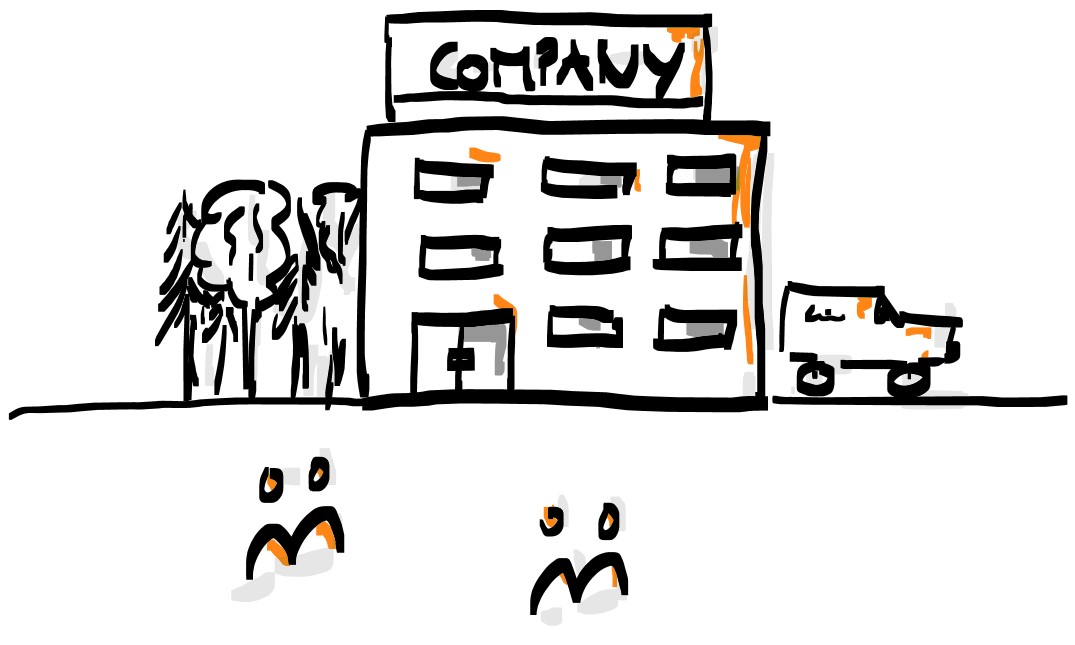
Natürlich ist es in unserer Ausbildungs- und Arbeitswelt naheliegend
und typisch, so zu denken und vorzugehen. Schließlich lernen wir überall, dass zuerst irgendwelche Voraussetzungen geschaffen werden müssen. Bevor loslegen können, benötigen wir meistens zuerst einen Abschluss, ein Training, ein Zertifikat, ein korrekt ausgefülltes Formular, den Projektantrag, sprich: irgendeine Erlaubnis oder ein einen Beweis, dass wir das auch können.
Und keine Frage
wenn es um Dinge geht, wo es um ECHT was geht, wo es ECHTES Spezialwissen braucht, bin ich auch SEHR dafür, wenn wir das so machen. Mich z.B. sollten Sie aus ganz vielen Gründen erst dann eine Autobahnbrücke bauen lassen, wenn ich Ihnen bewiesen und auch nachgewiesen habe, dass ich das kann.
Im Organisatorischen aber generell
und vor allem dort wo sich agiles, selbstorganisiertes Arbeiten anbietet – also in tendenziell komplexen Situationen, wozu z.B. alle Dienstleistungen gehören – heißt es zurecht: Stop Trying! Start Doing!
Schließlich haben wir doch einen JOB zu erledigen, also Wichtigeres zu tun, als Voraussetzungen für agiles Arbeiten zu schaffen.

Als Experten unserer eigenen Arbeit
können wir auch darauf vertrauen, dass wir sicher nichts so sehr Schlimmes anrichten werden, wenn wir uns ein kleines bisschen anders organisieren als sonst.
Was kann schon passieren, wenn wir uns – anders als bisher – einmal am Tag für eine Viertelstunde zur gemeinsamen Absprache im Team treffen?
Agilität geht davon aus
dass wir auf dem Weg zum Fertigen natürlich immer mit unfertigen, unperfekten, nicht-idealen Zuständen umgehen müssen. Das Imperfekte und das Ringen damit ist also gewissermaßen in die agile Philosophie und die agile Methodik eingebaut.
Das gilt auch für die Art und Weise, wie wir uns organisieren. Deshalb unterziehen wir uns ja immer wieder gemeinsam der Überprüfung des Status Quo. Das gibt uns genau die Flexibilität, die wir heute in den starren Hierarchien so vermissen.
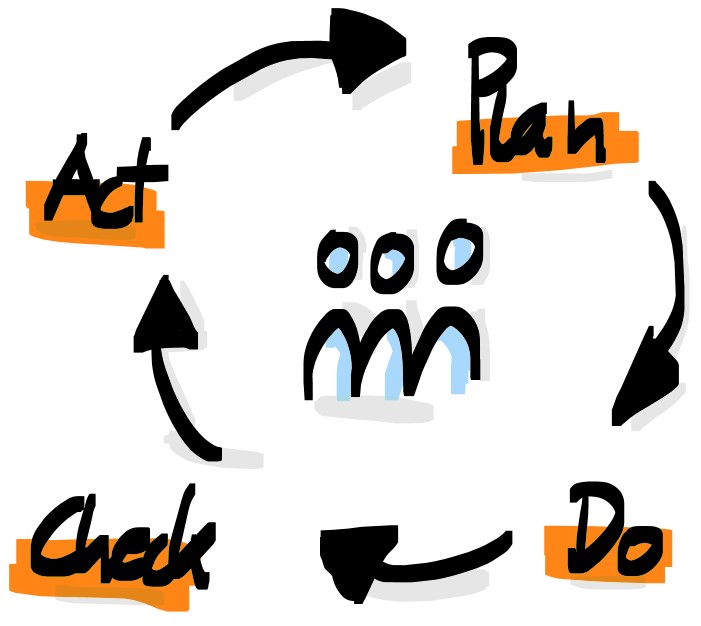
 Also heißt es immer wieder
 Also heißt es immer wieder
Sind wir auf dem richtigen Weg? Passt die Qualität der erarbeiten Ergebnisse? Passt der Cashflow? Passt die Art und Weise der Zusammenarbeit? Auf diese Art nähern wir uns – ohne Überforderung und in machbaren Schritten – nach und nach dem gewünschten Idealzustand.
Üben Sie also nicht erst. Sondern fangen Sie damit am besten noch heute an! Und hören dann nie wieder damit auf!
Wir alle sollten das tun!
Denn es spricht einiges dafür, dass wir bald nicht mehr anders die Ergebnisse einspielen, die wir einzuspielen haben, wenn wir bei Kunden und im Wettbewerb und auf dem Fachkräfte-Markt eine Rolle spielen möchten.
Weiterlesen?
- Anderson, David J.: Die Essenz von Kanban – kompakt.
- Kelly, Kevin: The Inevitable. Understanding the 12 Technological Forces That Will Shape Our Future.
- Laloux, Frederic: Reinventing Organizations: Ein Leitfaden zur Gestaltung sinnstiftender Formen der Zusammenarbeit
- Schwaber, Ken; Sutherland, Jeff: Scrum Guide
You are planning to or you are supposed to work Agile? However, you still have a few questions beforehand? You’re not alone. For instance, I was recently asked how one can practice working agile.
How can you practice agile working in a straightforward way
In the backlog of a team that was just taking its first agile steps
I once found the following user story: „The prerequisites for working agile are in place.“ I found this a bit funny, which in turn didn’t go down well with the team. (Sorry again, guys!) And in the light of day, it’s really not that funny.
Because: Doesn’t that mean we don’t trust ourselves to start out working agile right away? Why? What do we need to practice? What are these prerequisites supposed to be? Everyone has a certificate as a Scrum Master or as a Product Owner? Enough money has been spent on Agile training sessions or Jira licenses?
Of course, in our world of education and work, it is obvious
and typical to think and proceed in this way. After all, everywhere we go, we learn that some kind of preconditions have to be established first. Before we can get started, we usually first need a degree, a training, a certificate, a correctly filled out form, the project application, in other words: Some permission or proof that we can do it.
And no question
when it comes to things where it’s REAL stuff, where it takes REAL specialized knowledge, I’m also VERY much in favor of doing it that way. For example, you should NOT let me build a highway bridge for quite a few reasons until I have proven and also demonstrated to you that I can do it.
But generally in organizational matters
and especially where agile, self-organized work is appropriate – that is, in situations that tend to be complex, which includes, for example, all services – it is quite rightly said: Stop Trying! Start Doing!
After all, we have a JOB to do. We have more important things to do than to create conditions for agile working.
As experts of our own work
we can also trust that we certainly won’t cause too much harm if we organize ourselves just a little bit differently than we normally would.
What could possibly happen if – unlike in the past – we meet once a day for fifteen minutes standup to decide over important matters of the day together as a team?
Agility assumes
that on the way to the finished results, we naturally always have to deal with unfinished, imperfect, non-ideal states. So, in a sense, the imperfect and the struggle with it is built into the agile philosophy and methodology.
This also applies to the way we organize ourselves. After all, that’s why we’re always undergoing joint reviews of the status quo. That gives us precisely the flexibility that we miss so much today in the rigid hierarchies we mostly work in.
So again and again it goes:
Are we on the right track? Is the quality of the results we are producing a good fit? Do we have the enough cash flow? Are we happy with the way we cooperate? This way, we gradually approach – without being overwhelmed and in feasible steps – the desired ideal state of both the product or end result and the state of our collaboration.
So please don’t practice working agile first. Instead, begin with it preferably today! And never stop again!
We should all do this!
Because there are strong indications that we will soon have no other way to get the results we need to get if we want to play a role with customers and in the competitive and the skilled labor market.
Read more?
- Anderson, David J.: Kanban: Successful Evolutionary Change for Your Technology Business
- Kelly, Kevin: The Inevitable. Understanding the 12 Technological Forces That Will Shape Our Future.
- Laloux, Frederic: Reinventing Organizations: A Guide to Creating Organizations Inspired by the Next Stage in Human Consciousness
- Schwaber, Ken; Sutherland, Jeff: Scrum Guide