Über Lean lässt sich viel lesen. Oder man liest weniger, dafür das Richtige. 😀
Wer sich mit Lean beschäftigt
…kommt nicht umhin, sich mit Toyota zu beschäftigen. Denn dort beginnt Lean. Zumindest jenes Lean, wie wir es heute meist verstehen.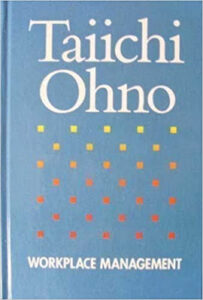
Taiichi Ohno prägte mit seinem Verständnis von effektivem Wirtschaften und seinen konkreten Ideen für die Organisation von Massenproduktion über Jahrzehnte die Toyota-Firmenkultur und -organisation. Maximal rentabel, wettbewerbsfähig, nachhaltig und flexibel sollte sie sein.
Wie werden die Abläufe gestaltet, damit sie möglichst effizient UND effektiv ineinandergreifen? Einige von Toyotas Antworten sind genauso berühmt wie legendär: Just-in-Time, Kanban und „Automation with a human touch“.
„Just because somebody is moving does not mean he is working.“ (Taiichi Ohno)
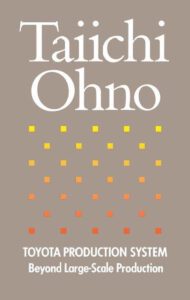
Die Bücher „Toyota Production System“ und „Workplace Management“ erklären Taiichi Ohnos Philosophie, seine Prinzipien und auch wie sie sich entwickelten und umgesetzt wurden. Auch, was das für die Organisation und deren Kultur bedeutet.
Und auch, wer verstehen möchte, was das Toyota Production System im Detail ausmacht, wie das grundsätzlich funktioniert und warum Toyota so arbeitet, kommt auf seine Kosten (vor allem natürlich in „Toyota Production System“).
Alle, die ihren ohnehin großen Lesestapel
… jetzt unter der Last umfangreicher Lean-Literatur zusammenbrechen sehen, kann ich beruhigen: Taiichi Ohno vermutete (wohl zurecht), dass vor allem beschäftigte Manager nur dann Bücher lesen, wenn sie kurz und verständlich geschrieben wären. Entsprechend „managerfreundlich“ verfasste er seine Bücher. Das kommt uns heute noch zugute, die Bücher hat man schnell durch.
Es lohnt sich allerdings, sie immer wieder mal zu lesen. Bei jedem Lesen kann man eine neue bis dato nicht oder nur halbverstandene Komponente des Lean-Ansatzes entdecken. Und: Die Ansätze sind auch heute noch wahnsinnig aktuell und wirken sehr modern.
Das kann
… durchaus überraschen. Schließlich wurden die Grundideen Mitte des letzten Jahrhunderts entwickelt. Beide Bücher fanden in den 1980er Jahren in englischer Sprache ihren Weg in die westliche Managementwelt. Erstaunlich, dass sie sich nicht schneller weiter verbreitet haben.
(Wer rätselt, woran das liegt, der kann einmal hier reinlesen: Bob Emiliani: The Triumph of Classical Management Over Lean Management. How Tradition Prevails and what to Do about it. O.O, 2018.)
Wenn Ihr also den Quellcode von Sutherlands/Schwabers Scrum und Andersons Kanban entziffern wollt und verstehen wollt, was dahinter steckt: Bei Taiichi Ohno beginnt alles.
„Improving efficiency makes sense only when it is tied to cost reduction.“ (Taiichi Ohno)
(Erwähnte ich bereits, dass es sich lohnt, Taiichi Ohnos Bücher immer und immer wieder zu lesen?)
Literaturangaben
- Ohno, Taiichi: Workplace Management.
- Ohno, Taiichi: Toyota Production System. Beyond Large-Scale Production.
- Emiliani, Bob: The Triumph of Classical Management Over Lean Management. How Tradition Prevails and what to Do about it.
You can read a lot about lean. Or you read less, but the right stuff. 😀
Whoever is into Lean
… can’t help but look at Toyota. Because that is where Lean starts. At least the Lean we usually consider today.
Taiichi Ohno shaped Toyota’s corporate culture and organization for decades with his understanding of effective business and his concrete ideas for organizing mass production. It had to be maximally profitable, competitive, sustainable, and flexible.
How are processes designed to interact as efficiently AND effectively as possible? Some of Toyota’s answers are as famous as they are legendary: Just-in-Time, Kanban, and „Automation with a human touch“.
„Just because somebody is moving does not mean he is working.“ (Taiichi Ohno)
The books „Toyota Production System“ and „Workplace Management“ explain Taiichi Ohno’s philosophy, his principles, and also how they evolved and were put into practice. Also what this means for the organization and its culture.
Anyone who wants to understand what the Toyota Production System is all about in detail, how it basically works, and why Toyota works the way it does, will also get their money’s worth (especially, of course, in „Toyota Production System“).
Your already large reading pile
… will collapse under the weight of extensive Lean literature? Be reassured: Taiichi Ohno assumed (probably rightly) that busy managers only read short and comprehensible books. Accordingly, he wrote his books in a „manager-friendly“ way. This still works to our advantage today, the books are quickly absorbed.
However, it is worth reading them again and again. Each time you read them, you can discover a new component of the Lean approach that was previously not understood or only half-understood. And: the approaches are still incredibly up-to-date today and seem very modern.
This may
… come as quite a surprise. After all, the basic ideas were developed in the middle of the last century. Both books found their way into the Western management world in English in the 1980s. It is astonishing that they did not spread more quickly.
(If you’re wondering why that is, read this: Bob Emiliani: The Triumph of Classical Management Over Lean Management. How Tradition Prevails and what to Do about it.)
So if you want to understand the source code of Sutherland/Schwaber’s Scrum and Anderson’s Kanban and understand what’s behind them: it all starts with Taiichi Ohno.
„Improving efficiency makes sense only when it is tied to cost reduction.“ (Taiichi Ohno)
(Did I mention that Taiichi Ohno’s books are worth reading over and over again?)