Gerade heute, wo so viele vereinzelt in ihren Homeoffices sitzen, wird eine Frage immer wichtiger: Was ist eigentlich ein Team?
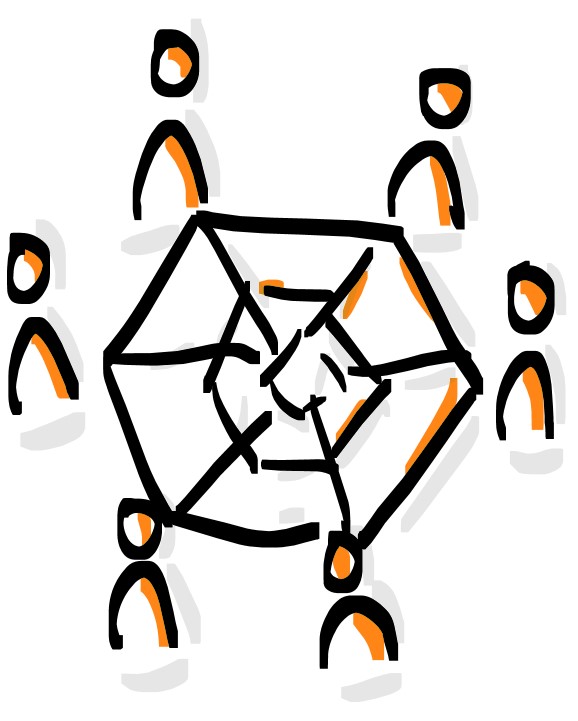
Was macht ein Team aus?
Man könnte meinen, die Diskussion sei erschöpfend behandelt, schließlich wurde schon früh viel und oft über Teams philosophiert. Trotzdem kommt das Thema in schöner Regelmäßigkeit auf und das heute vielleicht besonders. Denn heute sitzen viele von uns tagtäglich im Homeoffice und sind noch einmal mehr gefordert, sich jenes Team zu imaginieren, mit dem sie in „normalen“ Zeiten im Büro sitzen würden.
Sich mit dieser Frage immer wieder auseinanderzusetzen
ist ein natürlicher, zwangsläufiger Prozess und eine gesunde Entwicklung in gemeinschaftlichen Unternehmungen. Menschen treiben eben immer zwei Fragen um: Warum? Und: Wie?
Denn wir finden uns immer wieder freiwillig oder unfreiwillig, bewusst oder unbewusst in Situationen wieder, in welchen wir mit anderen zusammenwirken wollen oder müssen. Dann formen wir, ob wir wollen oder nicht, phasenweise Teams, die mindestens ein gemeinsames Interesse, mindestens einen expliziten oder impliziten gemeinsamen „Auftrag“ haben.
Manchmal ist es auch nur eine Idee davon was gemeinschaftlich erreicht werden kann oder sollte. Basierend auf der eigenen Bedürfnis- und Erfahrungswelt empfindet diesen „Auftrag“ allerdings jede/r individuell unterschiedlich. Immer.
 Wenn die Fragen auftauchen:
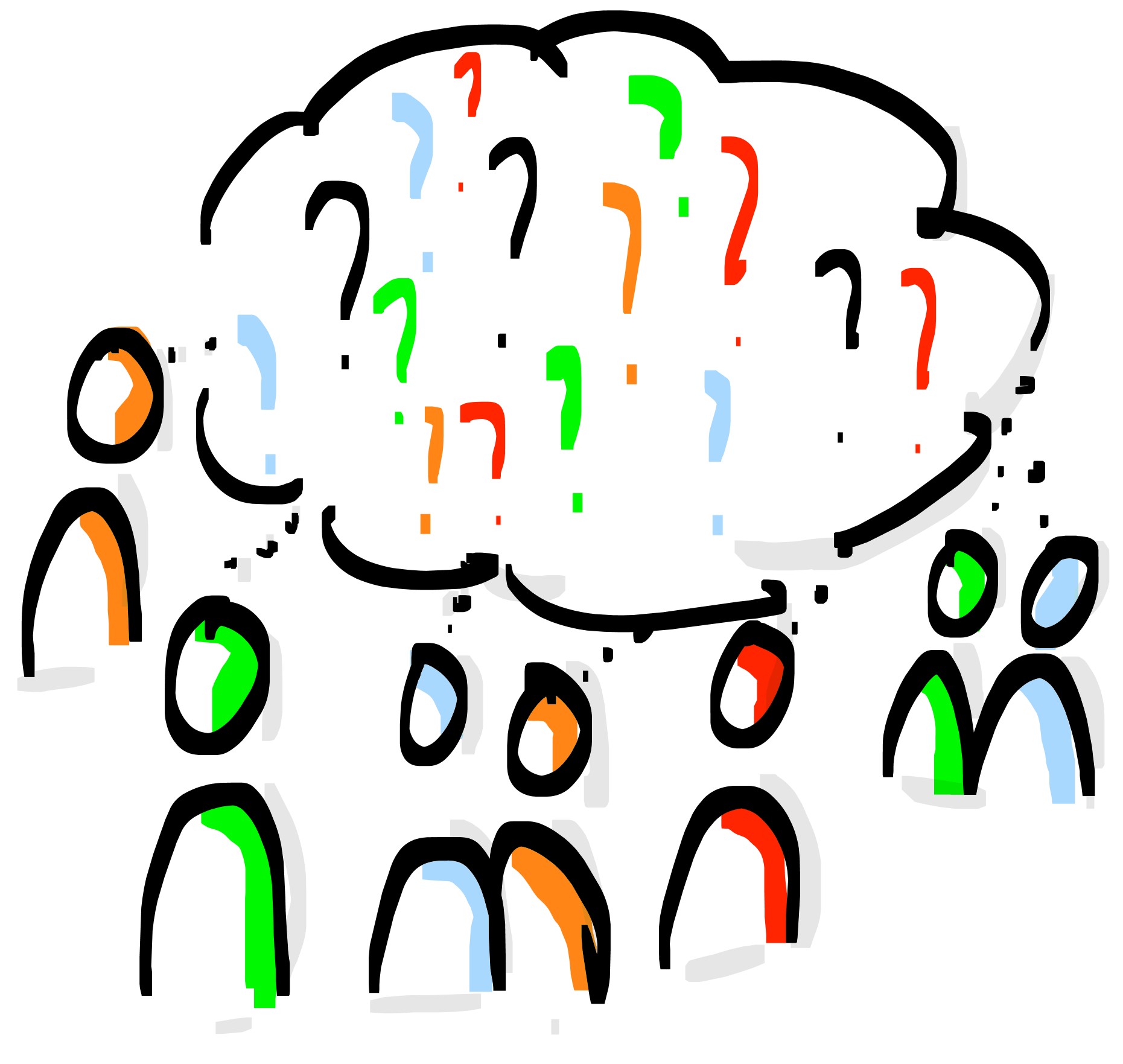 Wenn die Fragen auftauchen:
„Sind wir ein Team?“ und „Was macht uns als Team, Gruppe, Kollegen-Netzwerk, Familie, Freundeskreis, Band, Theatergruppe etc. aus?“ steht für mich deshalb als erstes an, zu klären, was der Verbund von Menschen gemeinsam erreichen will.
Was ist es, was sie zusammenhält? In diesem Zusammenhang sprachen meine Kollegen, Jan Fischbach und Wolf Steinbrecher einmal von „Ziel“ und „Produkt“. Ich nenne es Ergebnis. Und zwar das Ergebnis, das definiert, wo die Gruppe hinwill. Und zwar generell.
Der alleinige Fokus
auf Materialistisches, ein konkretes Produkt – so wichtig dies beim alltäglichen Tun auch sein mag – ruft nach meiner Erfahrung eher ungute Entwicklungen hervor und verhindert oft höhere Leistung.
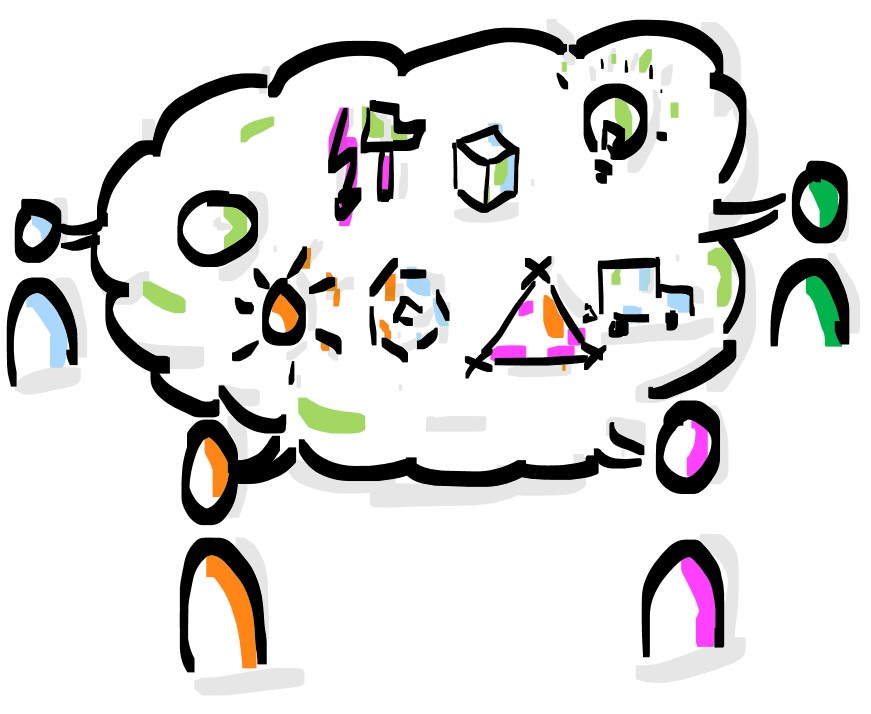
Dem Teamergebnis, dem Erfolg ist sicher zuträglicher, wenn generell und im alltäglichen Geschehen positiv Immaterielles (für mich sind das v.a. menschliche Werte und Sinn) ins Zentrum gestellt wird.
Denn das lässt jedem Mitglied mehr Spielraum, sich selbst im gemeinschaftlichen Auftrag zu finden und sich mit all seinen Talenten und Fähigkeiten maximal gut einzubringen.
Die meisten Menschen dürften allerdings
mehr die praktischere Seite des Warum und des Wie eines Teams interessieren. Denn wie erwähnt finden wir uns ja meist ohne viel Zutun in Situationen wieder, in welchen wir freiwillig oder unfreiwillig als Gemeinschaft, als Team zusammenwirken.
Mitarbeitende, KollegInnen, Vorgesetzte, Inhaber, Kinder, Schwester, Brüder, Mütter, Väter, Schüler, Lehrer, Schulleiter, Chefarzt, Stationsarzt, diensthabender Arzt, Krankenschwester, Patient, Vereinsmitglieder und -Vorstände, all diese Menschen fragen sich stets:
Was ist zu tun? Wofür setze ich mich bzw. setzen wir uns – jetzt – ein? Generell und konkret? Was will ich individuell erreichen, was im gemeinschaftlichen Verbund? Warum? Was ist der Nutzen? Wie sind meine Vorstellungen mit jenen der Gemeinschaft vereinbar? Wie setzen wir das am besten um? Wenn wir schon und aus irgendeinem, hoffentlich guten Grund zusammenarbeiten (müssen): Wie tun wir das, um das gemeinsam angestrebte Ergebnis am besten zu erreichen?

Wer es schafft
diese Fragen für sich und in der Interaktion mit den Beteiligten maximal ehrlich, offen und wertschätzend (d.h. für mich auch: hierarchiefrei) beantwortet, wird erfolgreich sein.
Denn in einem solchen Prozess werden die wichtigen Antworten gefunden, Strittiges (z.B. widerstrebende Interessen) gut besprochen und geregelt und der Weg zum gemeinsamen Ziel gut beschritten:
Ziele werden geklärt und transparent gemacht, Rollen geklärt und Verantwortungs- und Aufgabenbereiche definiert und so organisatorischer Sinn gestiftet. Dadurch wird eine echte und ehrliche Basis für Motivation und Leistung geschaffen. Darauf kommt es bei Teamwork, bei Zusammenarbeit, bei Kooperationen an.
Gerade gute Teams stellen sich deshalb von Zeit zu Zeit die Frage, ob sie so gut sind wie sie sein könnten. Wie können sie besser werden? Was braucht es dazu?
Anmerkungen
- Jan Fischbach: „Was ist ein Team? Aufruf zur Blogparade“, http://www.teamworkblog.de/2015/02/was-ist-ein-team-aufruf-zur-blogparade.html
- Jan Fischbach: „Was ist ein Team? Die ersten Reaktionen“, http://www.teamworkblog.de/2015/03/was-ist-ein-team-die-ersten-reaktionen.html
- Christian Heilmann: Making distributed team meetings work, http://christianheilmann.com/2015/02/24/making-distributed-team-meetings-work/
- Wolf Steinbrecher: Was ist ein Team? Die ein Produkt gemeinsam erstellen. (Wir noch nicht.), http://www.teamworkblog.de/2015/02/was-ist-ein-team-die-ein-produkt.html
Especially today, with so many of us working from home, one question is becoming increasingly important: What actually is a team?
What Defines a Team?
One might think that this discussion has been exhaustively covered; after all, teams were the subject of much and frequent philosophizing early on. Nevertheless, the topic comes up with some regularity, and perhaps especially so today. Because today many of us work from home a great deal of our time. And once again we are challenged to imagine that team with which we normally would spend our time when no Covid pandemic is hindering us to come to the office.
To deal with this question over and over again
is a natural, inevitable process and a healthy development in collaborative ventures. People are always driven by two questions: Why? And: how?
Because we constantly find ourselves in situations in which we want or need to work together with others. That’s voluntarily or involuntarily, consciously or unconsciously. Whether we like it or not, we at least temporarily form teams that have a minimum of one common interest, one explicit or implicit common „mission“.
Sometimes it is just an idea of what collectively can or should be achieved. Based on one’s own needs and experiences, however, everyone interprets this „mission“ differently. In all cases.
When the questions arise:
„Are we a team?“ and „What makes us a team, group, network of colleagues, family, circle of friends, band, theater group, etc.?“ are the first questions on my mind to clarify what the alliance of people wants to achieve together.
So, what is it? In this context, my colleagues Jan Fischbach and Wolf Steinbrecher once spoke of „goal“ and „product“. I call it result. Namely, the result that defines where the group wants to go. And in general.
The sole focus
on materialistic things, a concrete product – as important as this may be in everyday work – rather causes unpleasant developments in my experience and often blocks better performance.
It is certainly more beneficial for the concrete team result, the solid success if immaterial things are generally and positively placed in the center of everyday activities. For me, that means human values and meaning, above all. Because that leaves more room for each member to identify with the common mission and to contribute maximally well with all his talents and abilities.
Most people, however, are likely to
be are more interested in the more practical side of why and how of a team. After all, as mentioned, we usually find ourselves quickly and unexpectedly in situations in which we voluntarily or involuntarily work together as a community, as a team.
If so, employees, colleagues, supervisors, owners, children, sisters, brothers, mothers, fathers, students, teachers, principals, chief physicians, ward physicians, duty physicians, nurses, patients, association members, and boards – people of this like are always asking themselves:
What is to be done? What do I or we – now – stand up for? Generally and concretely? What do I want to achieve individually, and what do I want to achieve within the collaboration? Why? What is the benefit? How are my ideas compatible with those of the community? How do we best implement this? If we are already and for some, hopefully, good reason, (need to) work together: how do we do that to best achieve the jointly desired outcome?
Whoever succeeds
answers these questions for himself and in the interaction with the participants maximally honestly, openly and appreciatively (which means for me also without hierarchy), will be successful.
Because in such a process, the important answers are found, contentious issues (e.g., conflicting interests) are well discussed and settled, and the path to the common goal is well navigated:
Goals will be clarified and made transparent, roles will be made clear, and areas of responsibility and tasks will be defined, thus providing organizational meaning. This creates a genuine and honest basis for motivation and performance. This is what matters in teamwork, in collaboration, in cooperation.
So, from time to time, if they are good, teams ask themselves from time to time whether they are still as good as they can be: „How can we get better? What does it take?“
Especially today, with so many of us working from home, one question is becoming increasingly important: What actually is a team?
What Defines a Team?
One might think that this discussion has been exhaustively covered; after all, teams were the subject of much and frequent philosophizing early on. Nevertheless, the topic comes up with some regularity, and perhaps especially so today. Because today many of us work from home a great deal of our time. And once again we are challenged to imagine that team with which we normally would spend our time when no Covid pandemic is hindering us to come to the office.
To deal with this question over and over again
is a natural, inevitable process and a healthy development in collaborative ventures. People are always driven by two questions: Why? And: how?
Because we constantly find ourselves in situations in which we want or need to work together with others. That’s voluntarily or involuntarily, consciously or unconsciously. Whether we like it or not, we at least temporarily form teams that have a minimum of one common interest, one explicit or implicit common „mission“.
Sometimes it is just an idea of what collectively can or should be achieved. Based on one’s own needs and experiences, however, everyone interprets this „mission“ differently. In all cases.
When the questions arise:
„Are we a team?“ and „What makes us a team, group, network of colleagues, family, circle of friends, band, theater group, etc.?“ are the first questions on my mind to clarify what the alliance of people wants to achieve together.
So, what is it? In this context, my colleagues Jan Fischbach and Wolf Steinbrecher once spoke of „goal“ and „product“. I call it result. Namely, the result that defines where the group wants to go. And in general.
The sole focus
on materialistic things, a concrete product – as important as this may be in everyday work – rather causes unpleasant developments in my experience and often blocks better performance.
It is certainly more beneficial for the concrete team result, the solid success if immaterial things are generally and positively placed in the center of everyday activities. For me, that means human values and meaning, above all. Because that leaves more room for each member to identify with the common mission and to contribute maximally well with all his talents and abilities.
Most people, however, are likely to
be are more interested in the more practical side of why and how of a team. After all, as mentioned, we usually find ourselves quickly and unexpectedly in situations in which we voluntarily or involuntarily work together as a community, as a team.
If so, employees, colleagues, supervisors, owners, children, sisters, brothers, mothers, fathers, students, teachers, principals, chief physicians, ward physicians, duty physicians, nurses, patients, association members, and boards – people of this like are always asking themselves:
What is to be done? What do I or we – now – stand up for? Generally and concretely? What do I want to achieve individually, and what do I want to achieve within the collaboration? Why? What is the benefit? How are my ideas compatible with those of the community? How do we best implement this? If we are already and for some, hopefully, good reason, (need to) work together: how do we do that to best achieve the jointly desired outcome?
Whoever succeeds
answers these questions for himself and in the interaction with the participants maximally honestly, openly and appreciatively (which means for me also without hierarchy), will be successful.
Because in such a process, the important answers are found, contentious issues (e.g., conflicting interests) are well discussed and settled, and the path to the common goal is well navigated:
Goals will be clarified and made transparent, roles will be made clear, and areas of responsibility and tasks will be defined, thus providing organizational meaning. This creates a genuine and honest basis for motivation and performance. This is what matters in teamwork, in collaboration, in cooperation.
So, from time to time, if they are good, teams ask themselves from time to time whether they are still as good as they can be: „How can we get better? What does it take?“