„Doing is better than not doing, and if you do something badly you’ll learn to do it better.“ (Twyla Tharp)
Gerade hierzulande neigen wir ja dazu, an das Genie zu glauben. Daran, dass Kreativität mindestens ein seltenes Talent ist. Angeboren oder irgendwie genetisch veranlagt. Wenigen Auserwählten vorbehalten.
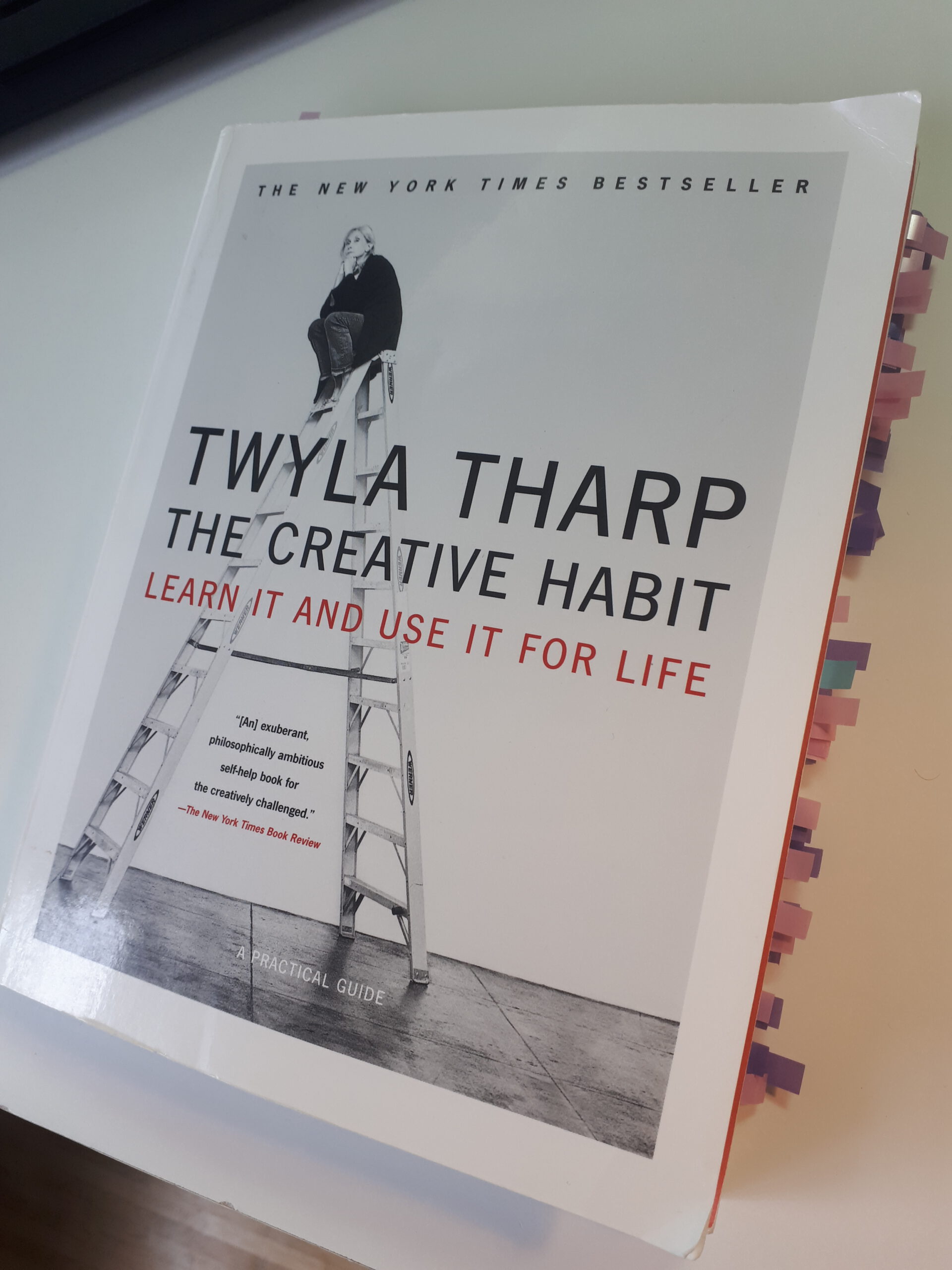
Und klar…
… ein gewisses Maß an Talent dürfte bei kreativem Wirken hilfreich sein. Ansonsten ist an der Mär vom kreativen Genie wenig dran. Kreativität ist eben wie so vieles – sorry Leute – schlicht: Üben und Tun. Also: Arbeit.
Und zwar in allererster Linie Arbeit an und mit sich selbst. Und das gewohnheitsmäßig, also regelmäßig und immer. Zumindest ist es das, was alle ernstzunehmenden Experten auf diesem Gebiet sagen. So auch Twyla Tharp, ihres Zeichens Choreographin.
Es gibt also keinen Zweifel
Wer es mit Kreativität ernst meint oder meinen will, wird sie als Teil des eigenen beruflichen und/oder privaten Lebens akzeptieren und betrachten. Und entsprechende Gewohnheiten in den Tag einbringen. Das, was Profis halt so machen. Twyla Tharp erklärt in Buch, was das heißt:
- Wie dirigiert man den kreativen Prozess? Worauf kommt es genau an?
- Wie fabriziert man (gute und schlechte) Ergebnisse?
- Was trägt man mit der eigenen Persönlichkeit, den eigenen Fähigkeiten, dem eigenen Charakter und der eigenen Geschichte und den eigenen Prägungen selbst zu Kreativität bei?
- Welche Rolle spielen dabei auch andere oder die äußeren Umständen?
- Wie kann man sie beeinflussen?
- Wieviel sollte man sie beeinflussen?
„This, to me, is the most interesting paradox of creativity: In order to be habitually creative, you have to know how to prepare to be creative, but good planning alone won’t make your efforts successful: it’s only after you let go of your plans that you can breathe life into your efforts.“ (Twyla Tharp)
Durch viele prägnante authentische Beispiele…
…aus ihrer eigenen kreativen Arbeit und mit gekonntem, kurzweiligem Storytelling öffnet Tharp die Tür zur Werkzeugkammer ihrer Kreativarbeit. Dadurch vermittelt sie ein unglaubliches theoretisches, praktisches und auch konkretes, praktikables Grundwissen.
Zwischendurch regt Twyla Tharp die Leser in Übungen dazu an, sich der Zusammenhänge klarzuwerden und die eigenen „kreativen“ Wurzeln zu erkennen.
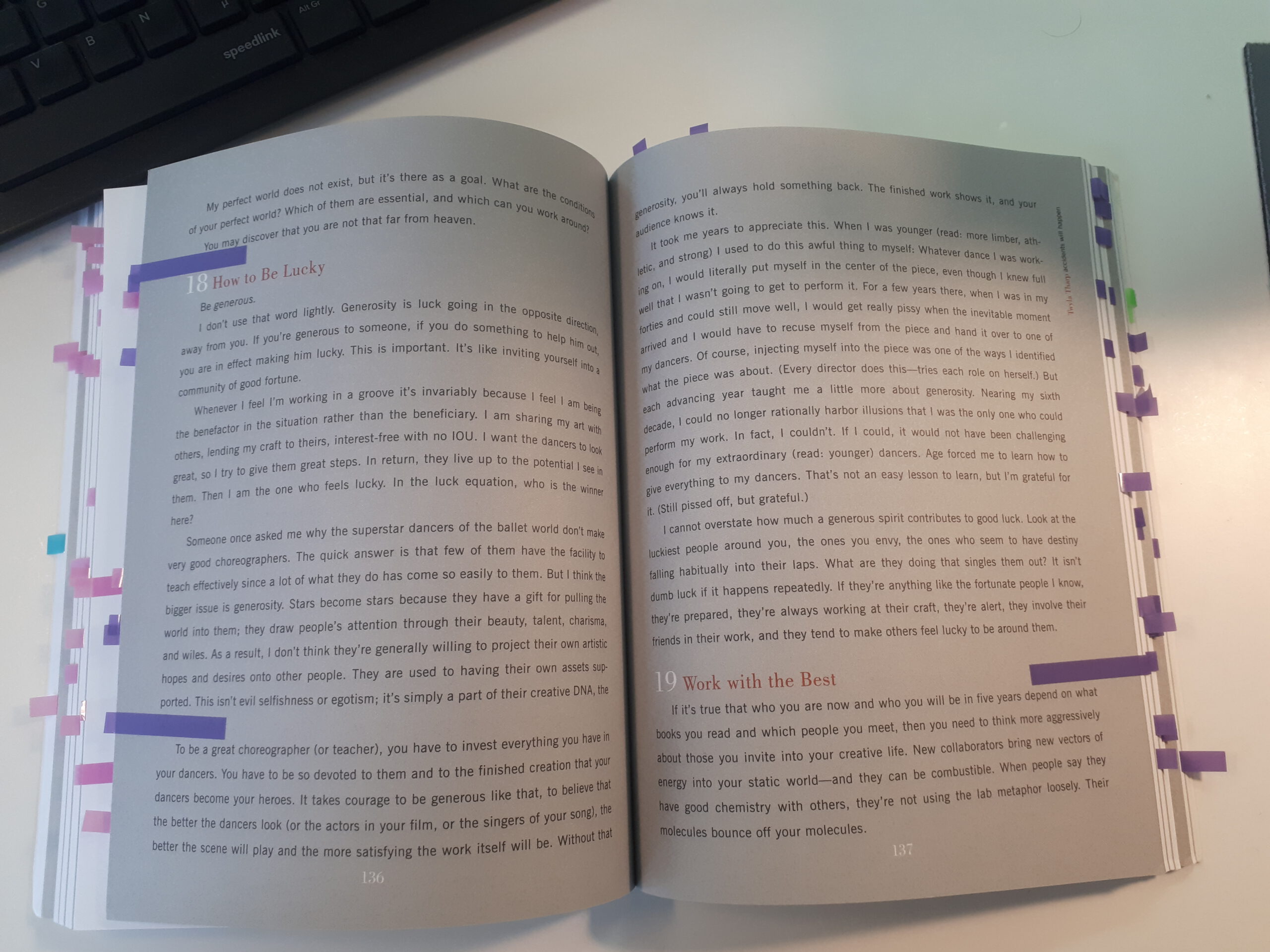
Das alles geschieht spielerisch, in einem plaudernden, gleichzeitig aber sehr verbindlichen Ton. So findet man beim Lesen – fast beiläufig – selbst eine kreative Struktur und beginnt sie zu etablieren (wenn man mag). Zumindest kommt man diesem Schritt sehr sehr nahe.
Das Ziel dieser kreativen Reise, die – wie in jedem guten (!) Prozess üblich – natürlich von Rückschlägen und Fehlern geprägt ist: Schlussendlich seine EIGENEN kreativen Wurzeln, das EIGENE kreative Potenzial so zu verwirklichen, wie man das möchte und kann.
Man könnte auch sagen: Das tun und auch tun können, was man tun will. So gut es eben geht.
Twyla Tharps ernsthafte, fokkusierte Art…
… und ihr UNBEIRRBARER PROFESSIONELLER Ansatz, Kreativität zu leben ist sehr beeindruckend und auch inspirierend. Vor allem auch deshalb, weil in jeder Zeile deutlich wird, dass Kreativität etwas ist, was Menschen, ja MENSCH-SEIN ausmacht.
Es kommen also nicht nur jene Leser auf ihre Kosten, die Kreativität als Job verstehen wollen oder müssen (sind wir das nicht irgendwie alle?). Diese Leser finden hier eine riesengroße inspirierende Sammlung an hilfreichen Tipps und Herangehensweisen.
Aber auch all jene, die „nur“ etwas bewegen und gestalten möchten, am besten gemeinsam mit anderen und am liebsten ein bisschen zielgerichteter als bislang, bekommen Orientierung: Wie können sie Ihre Pläne durch kreative Arbeit an sich selbst besser verwirklichen? Tywla Tharps Botschaft:
Auf die ganz eigene Art kreativ zu gestalten bedeuet die eigene Freiheit zu leben. Das zu tun und gleichzeitig mit anderen Gutes und Schönes zu schaffen – darum geht es.
„Habitually creative people are prepared to be lucky.“ (Twyla Tharp)
„Doing is better than not doing, and if you do something badly you’ll learn to do it better.“ (Twyla Tharp)
Especially in this country, we tend to believe in genius. That creativity is at least a rare talent. Innate or somehow genetically predisposed. Limited to a selected few.
Sure…
…a certain amount of talent should be helpful in doing creative work. Apart from that, there is little truth in the myth of creative genius. Creativity, like so many things – sorry people – is simply: practicing and doing. In other words: work.
First and foremost, work on and with oneself. And habitually. That means regularly and always. At least that is what all reputable experts in this field say. So too Twyla Tharp, choreographer by profession.
There is no doubt
If you want to take creativity seriously, you will accept and consider it as part of your professional and/or private life. And bring corresponding habits into the day. Just what professionals do. Twyla Tharp explains in her book what this means:
- How do you direct the creative process? What exactly matters?
- How do you produce (good and bad) results?
- What do you contribute to creativity with your own personality, your own abilities, your own character and history, and your own imprints?
- What role do others or external circumstances also play in this?
- How can you influence them?
- How much should you influence it?
„This, to me, is the most interesting paradox of creativity: In order to be habitually creative, you have to know how to prepare to be creative, but good planning alone won’t make your efforts successful: it’s only after you let go of your plans that you can breathe life into your efforts.“ (Twyla Tharp)
Through many concise authentic examples…
…from her own creative work and with skillful, entertaining storytelling, Tharp opens the door to the tool chamber of her creative work. Through this, she imparts incredible theoretical, practical, and also concrete, workable basic knowledge.
Along the way, Twyla Tharp uses exercises to encourage readers to become aware of the contexts and to recognize their own „creative“ roots.
All this is done playfully, in a chatty but at the same time very engaging tone. Thus, while reading, you find – almost casually – a creative structure yourself and begin to establish it (if you like). At least you come very very close to this step.
The goal of this creative journey, which – as usual in every good (!) process – is naturally marked by setbacks and mistakes: to finally realise your OWN creative roots, your OWN creative potential in the way you want and are able to.
You might also say: to do and be able to do what you want to do. As best as you can.
Twyla Tharp’s earnest, focussed manner…
… and her INCREDIBLE PROFESSIONAL approach to living creatures is very impressive and also inspiring. Especially because it becomes clear in every line that creativity is something that makes people, yes HUMAN beings.
So it is not only those readers who want or need to understand creativity as a profession (aren’t we all somehow?) who will benefit. These readers will find a huge inspiring collection of helpful tips and approaches here.
But also all those who „only“ want to get things moving and create something, preferably together with others and preferably a bit more purposeful than before, will get orientation: How can you better realize your plans by creatively working on yourself? Twyla Tharp’s message:
To create in your own way is to live your personal freedom. Doing that and at the same time creating good and beautiful things together with others – that’s what it’s all about.
„Habitually creative people are prepared to be lucky.“ (Twyla Tharp)